
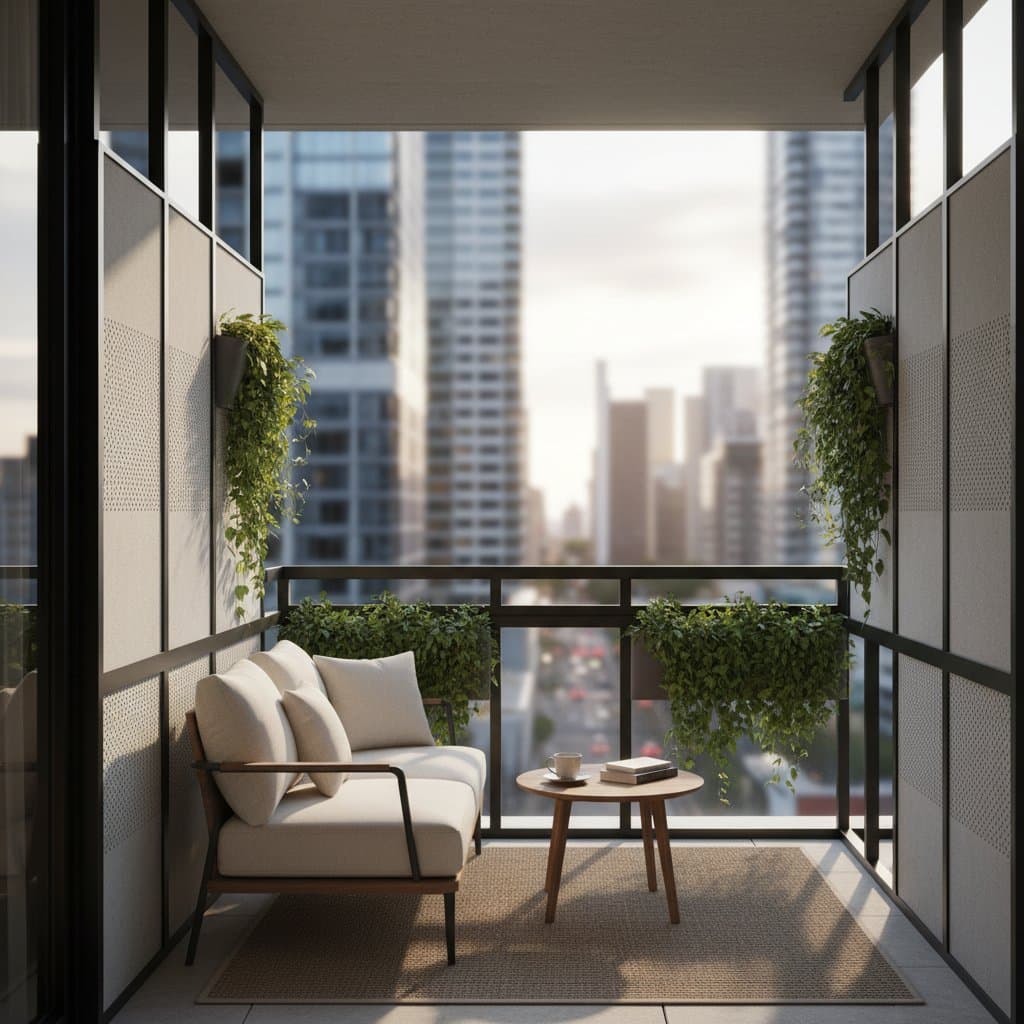
4. Mount the Screens
Position each panel carefully and attach it to the brackets with screws, bolts, or heavy-duty cable ties. Overlap adjacent panels by one inch, or 2.5 centimeters, to eliminate potential sound leaks. For fabric-based screens, tension the material evenly prior to securing it, but take care not to overstretch and risk damaging seams.
With framed designs, install the frame structure first, then insert or clip the panels into place. Apply acoustic caulk to seal edges and corners, addressing any minor gaps that could allow noise penetration.
5. Test and Adjust
Step onto the balcony and evaluate the ambient sound levels. The background noise should now sound noticeably softer and more diffused. Should persistent noise enter via gaps, consider adding an extra layer to the most affected area or installing an outdoor curtain ahead of the primary screen. A supplementary thin layer often proves effective in minimizing sound reflections.
Safety Considerations
- Fasten components securely. Unsecured screens pose a risk of detachment in strong winds. Inspect and tighten all connections on a monthly basis.
- Select non-flammable options. Opt exclusively for fire-rated fabrics or composite materials.
- Respect load capacities. Balcony railings typically support up to 50 pounds, or 22.6 kilograms, of additional weight. Distribute panels uniformly to avoid overload.
- Use protective gear. Wear gloves whenever manipulating metal or fiberglass elements.
- Preserve drainage paths. Maintain a one-inch, or 2.5-centimeter, clearance at the base to facilitate water runoff.
Common Issues and Solutions
Issue: Panels vibrate or produce rattling sounds.
Root cause: Exposure to wind forces or insecure attachments.
Resolution: Insert weatherstripping tape between brackets and panels, followed by re-tightening all fixtures.
Issue: Residual noise levels remain elevated.
Root cause: Reflections from adjacent walls or floors.
Resolution: Incorporate an outdoor rug or strategically placed vertical plants along one surface to dampen echoes.
Issue: Development of mildew or color fading.
Root cause: Accumulated moisture behind fabric layers.
Resolution: Dismantle screens seasonally, clean with a vinegar-water solution, and ensure complete drying prior to reassembly.
Issue: Corrosion on attachment hardware.
Root cause: Direct exposure of metal to precipitation.
Resolution: Substitute with stainless steel or protective-coated alternatives. Seal around fastener heads with a narrow application of sealant.
Project Timeline and Expenses
This endeavor suits a weekend timeline for two participants, requiring approximately three to four hours of active labor after gathering supplies. Expenses vary by selection:
- Custom fabric assemblies: 150 to 250 dollars
- Ready-made acoustic barriers: 300 to 500 dollars
- Structured or modular setups: 500 to 800 dollars
Economize through basic clip mechanisms in lieu of bespoke brackets or by enclosing just one side rather than multiple. Prioritize weatherproof qualities, as budget indoor variants degrade rapidly in external conditions.
Upkeep Routine
Sustain screen integrity through regular cleaning and inspection. Adhere to this regimen:
- Monthly inspections: Verify fastener integrity, adjust tightness, and remove surface dust with a soft brush.
- Seasonal cleaning: Clean fabric or PVC elements using mild soap and water, followed by thorough rinsing.
- Annual evaluation: Examine for signs of fading, corrosion, or structural wear. Substitute any panels exhibiting slackness or discoloration.
For enhanced longevity, relocate detachable panels to indoor storage during extended vacancies or severe weather. Store them rolled or stacked horizontally to prevent edge deformation.
Integrating Storage Solutions
When balconies serve dual purposes as storage areas, acoustic screens offer organizational benefits. Attach lightweight tools, collapsible seating, or planter supports to the interior frame. Position stored goods below railing level to prevent contact with panels.
Affix durable, waterproof labels to containers. Ensure a minimum six-inch, or 15-centimeter, separation between items and screens to promote ventilation. Such practices mitigate mold growth and preserve acoustic performance.
Engaging Professional Assistance
Balconies adjacent to high-traffic roadways or rail corridors may demand advanced noise mitigation beyond standard installations. Consult an acoustic specialist for precise decibel assessments and tailored material recommendations. Seek experts in outdoor implementations and pose these inquiries:
- What decibel reduction does the proposed solution achieve?
- Have the materials undergone outdoor weather testing?
- Does the installation permit non-destructive removal?
Implementation Guide
- Evaluate the environment. Dedicate time to auditory assessment from various balcony positions to identify dominant noise sources.
- Select appropriate components. Renters benefit from detachable fabric options, while property owners favor enduring framed composites.
- Execute installation with caution. Proceed methodically through measurements, attachments, and edge sealing.
- Maintain diligently. Perform routine cleaning and inspections to sustain efficacy.
These steps yield tranquil moments amid urban bustle. A modest outlay and focused weekend effort restore the balcony as a serene personal haven.