
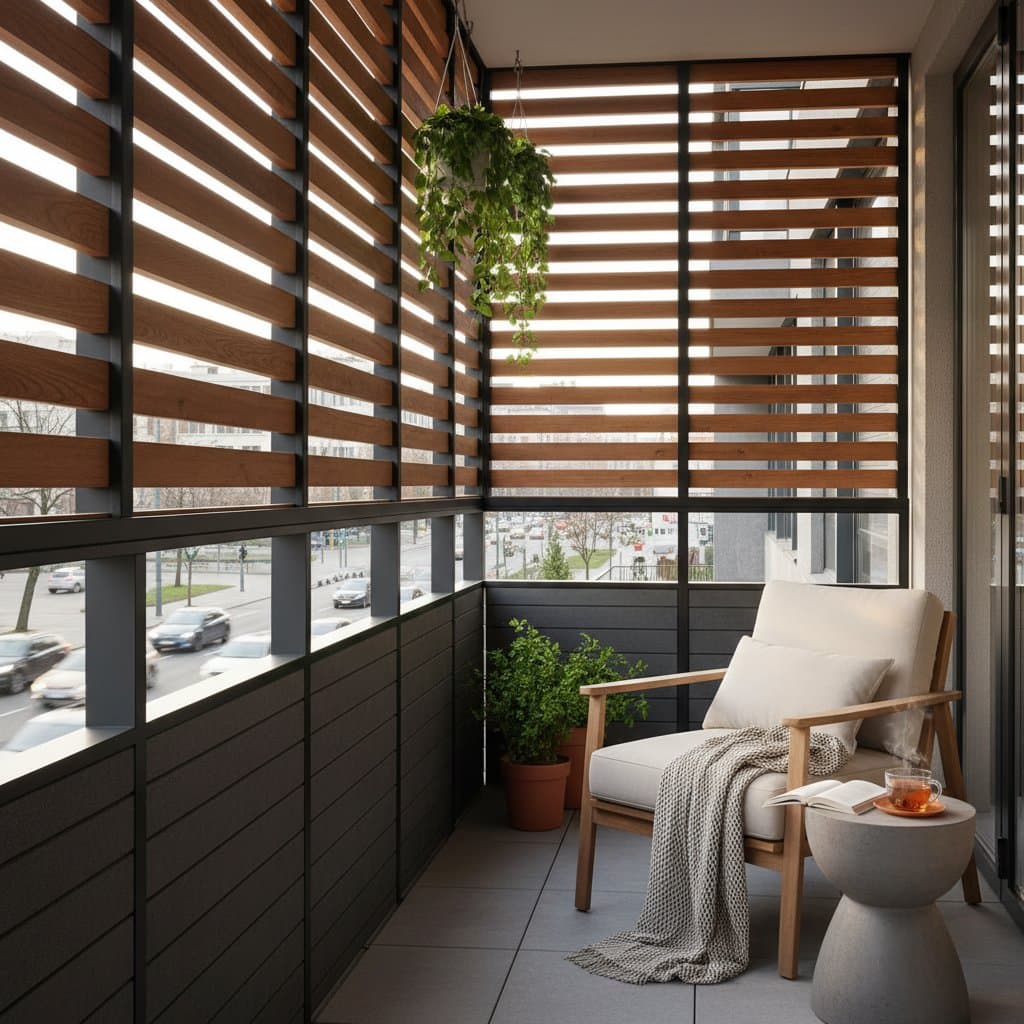
Introduction to Acoustic Privacy Screens
Urban living often means contending with constant noise from traffic, neighbors, and city bustle. Acoustic privacy screens offer a practical solution to create a serene balcony oasis. These panels absorb and block sound while enhancing privacy and aesthetics, reducing noise levels by up to 10 decibels for noticeable relief.
Select the right type based on your environment. Fabric panels excel at absorbing echoes and voices, mass-loaded vinyl targets deep rumbles, and hybrids provide comprehensive coverage. Proper installation ensures maximum effectiveness, turning your balcony into a peaceful retreat year-round.
Selecting the Right Screen Type
Three primary types of acoustic privacy screens suit various balcony needs.
- Fabric-based acoustic panels, constructed from fiberglass or polyester, absorb mid- to high-frequency sounds like conversations and echoes. Their lightweight design makes them ideal for standard railings without added strain.
- Mass-loaded vinyl (MLV) sheets excel at blocking low-frequency noises, such as vehicle rumbles or bass from nearby music. These denser materials require sturdy support but deliver superior sound isolation.
- Hybrid screens integrate MLV with acoustic fabric for balanced performance across frequencies. They maintain a sleek appearance while offering versatile noise reduction.
Evaluate your primary noise sources before purchasing. For traffic-heavy areas, prioritize MLV or hybrid options. In quieter settings dominated by voices, fabric panels suffice and add a softer visual touch.
Installation Steps
Follow these structured steps to install acoustic screens securely and effectively.
Step 1: Measure and Plan the Layout
Begin by measuring the balcony's railing width and height precisely. Account for 2 inches (5 centimeters) of overlap on each side to prevent sound leakage. Determine coverage extent, such as full enclosure or targeted areas around seating. Sketch a simple diagram to calculate the number of panels required.
Step 2: Prepare the Support Surface
Examine the railing or wall for stability. Tighten any loose screws or bolts, and address rust through cleaning with a mild detergent. Allow surfaces to dry completely. For concrete walls, prepare masonry anchors to ensure a firm hold.
Step 3: Mount the Frame or Base
Assemble a basic frame using 2-by-2-inch wooden boards treated for weather resistance, or opt for metal clamps on steel balconies. Secure with outdoor-rated screws and verify level alignment using a spirit tool. This foundation supports the panels without compromising balcony integrity.
Step 4: Attach the Panels
Position the screen material flat on the ground before lifting. Align it with the frame or railing, securing every 12 inches (30 centimeters) using clips or heavy-duty zip ties. Maintain uniform tension to eliminate sagging. Apply sealant along edges of vinyl sheets to minimize wind-induced vibrations.
Step 5: Seal and Finalize
Fill seams and gaps with weatherproof caulk for airtight barriers. Trim surplus material using a sharp utility knife. Incorporate decorative elements, such as trailing plants, to blend functionality with balcony style.
Step 6: Test for Effectiveness
Occupy your primary seating area and assess sound levels. Adjust overlaps or add baffles to corners if leakage persists. Minor repositioning often boosts performance by several decibels.
Essential Safety Considerations
Acoustic materials vary in weight; a standard 4-by-8-foot MLV sheet reaches 60 pounds (27 kilograms). Anchor installations firmly to withstand gusts, testing mounts prior to extended use.
Preserve balcony drainage by maintaining 1 inch (2.5 centimeters) clearance at the base, preventing water accumulation that could harm structures. Verify building regulations before installation on shared spaces, as some prohibit facade alterations or heavy additions.
Common Troubleshooting Solutions
Sagging or Flapping Panels in Wind: Reinforce attachments and install horizontal support bars. Vibrations from movement diminish sound-blocking capabilities.
Excessive Light Blockage: Opt for semi-transparent fabrics or open upper sections. Pair with clear acrylic inserts in lower areas for balanced light and noise control.
Moisture Accumulation: Incorporate small weep holes at panel bases to drain condensation. Regular checks prevent mold growth.
Persistent High Noise Levels: Extend coverage with side returns or overhead caps to seal pathways. Integrate vertical gardens or heavy drapes for additional absorption layers.
Budgeting and Timeline
Expect costs of 3 to 6 dollars per square foot for basic fabric screens, 5 to 10 dollars for MLV, and up to 12 dollars for hybrids. A 10-by-6-foot balcony setup ranges from 180 to 500 dollars in materials.
Solo installation requires 4 to 6 hours, focusing on measurement, mounting, and sealing. Assistance halves this time, particularly for handling initial heavy panels. Bypass indoor foam alternatives, as they deteriorate outdoors; repurpose durable recycled curtains for cost-effective backups.
Ongoing Maintenance Practices
Schedule cleaning every two months with a soft brush or vacuum to clear dust. Fabric panels respond well to mild soap rinses followed by low-pressure hose washing. Steer clear of abrasive chemicals that erode protective coatings.
Post-storm inspections ensure mount integrity; retighten as needed and refresh sealant on cracks. For removable setups, indoor storage during harsh weather prolongs lifespan. Replace faded sections individually rather than overhauling the entire system.
Storage and Seasonal Care
Store detachable panels flat or rolled under protective covers in dry, shaded spots. Avoid creasing vinyl to preserve flexibility. Label pieces by location, such as "Left Section," and organize fasteners in a dedicated container for swift reinstallation.
Spring Preparation: Check for winter damage like rust or mold, then sun-dry panels before setup.
Summer Adjustments: Secure expansions from heat and add shading to combat UV fading.
Fall Maintenance: Remove debris and reseal before cooler temperatures arrive.
Winter Protection: Cap unused hardware holes with silicone to block moisture ingress.
These routines avert minor issues from escalating.
Professional Assistance Options
For balconies near highways or rail lines, consult an acoustic engineer for precise noise assessments and material recommendations. Thicker MLV or layered configurations often suit intense low-frequency exposure.
In high-rises requiring elevated access, engage certified installers equipped with safety gear and insurance. Request documentation of material weather resistance prior to commitment.
Key Benefits and Next Steps
Acoustic screens achieve 5 to 10 decibel reductions through correct setup, leveraging dense fabrics and vinyl for optimal results. Sealing and tension prove as vital as material choice.
Simple upkeep sustains performance: regular cleaning, tightening, and resealing. Invest a modest budget and afternoon to elevate balcony tranquility.
Begin modestly with a single panel near seating to experience the calm. Measure your space, select materials matching your noise profile, and procure a test piece. Incremental additions build lasting comfort, privacy, and harmony in urban settings.