
Introduction
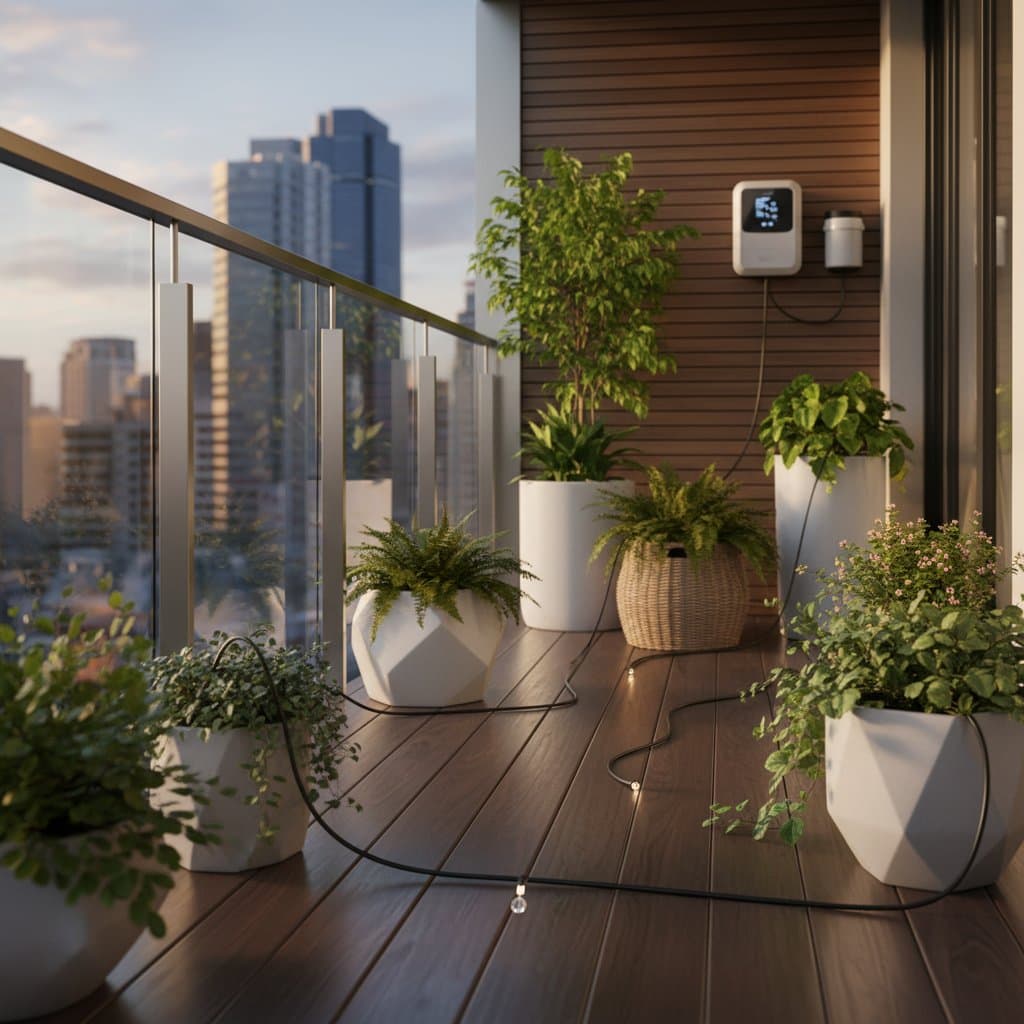
Balcony gardens bring life to urban living, but travel can disrupt their care. A compact auto-watering system solves this challenge by delivering consistent moisture without daily attention. This approach uses timed micro-drip irrigation to mimic natural rainfall, ensuring plants receive just enough water to flourish.
City dwellers often face space constraints and variable weather, making manual watering unreliable before trips. Automated solutions provide peace of mind, allowing you to focus on your journey. With proper setup, your balcony oasis remains lush upon your return.
Essential Tools
Gather these items for a basic micro-drip system suited to balconies. A starter kit includes tubing, emitters, and connectors, typically available at garden centers or online. Select components rated for outdoor use to withstand sun and wind exposure.
Key tools consist of a battery-operated timer, adjustable emitters for pots, and a pressure regulator if connecting to a hose bib. Spare parts like filters and end caps prevent downtime. A small bucket or container helps test water flow during assembly.
Step-by-Step Setup
Begin by planning your layout. Measure the distance from your water source to the farthest pot, and note the number of plants needing irrigation. Position the timer near an outlet or use a solar-powered model for convenience.
Connect the tubing to the faucet adapter, then attach the filter to trap debris. Run the main line along the balcony rail or pots, securing it with clips. Install emitters at the base of each plant, adjusting flow rates based on pot size and soil type.
Program the timer for short cycles, such as 10 to 15 minutes every other day, depending on climate. Test the system by running a full cycle and observing distribution. Adjust as needed to avoid overwatering or dry spots.
Troubleshooting
Address uneven watering by inspecting emitters for clogs; clean or replace those that distribute inconsistently. If no water flows, verify the filter remains clear and the timer receives power. For pooling water, decrease the run time or switch to emitters with reduced flow rates.
Many problems stem from debris in the lines or insecure connections. Maintain a supply of replacement emitters and fittings for prompt repairs. Regular checks during the first week of use help identify and resolve issues early.
Maintenance and Storage
Flush the lines monthly by detaching the end cap and circulating fresh water through the system. Before winter storage, empty all tubing of moisture and keep it in a protected, dry area. Store the timer inside to extend its battery life.
Replace filters at the start of each growing season to sustain performance. Inspect tubing for cracks annually, particularly after exposure to extreme temperatures. These routines ensure longevity and reliability for multiple years.
Budget and Time Considerations
Expect to spend 30 to 60 dollars on a fundamental balcony setup, covering tubing, emitters, and a timer. Assembly requires one to two hours, depending on the number of pots. Ongoing expenses stay low, as the system operates with minimal water volume and no electricity beyond batteries.
Durable materials mean components endure several seasons with basic upkeep. Initial investment pays off through reduced plant loss and effortless travel preparation. Compare kits to find value without unnecessary features.
Seasonal Adjustments
During warmer periods, extend watering intervals slightly to match increased evaporation. In cooler conditions, reduce cycle lengths or suspend operation amid consistent rain. Monitor soil moisture manually at first to fine-tune schedules.
Adapt to local weather patterns for optimal results. For example, humid summers may need less frequent runs than dry spells. These tweaks prevent stress on roots and promote steady growth year-round.
Professional Assistance
Consult a licensed plumber if your balcony shares a water line or involves intricate plumbing modifications. Professionals install backflow preventers to safeguard the building's water supply from contamination. This step complies with local codes and avoids potential liabilities.
Seek expert help for elevated or multi-level setups where access poses risks. A brief consultation ensures safe integration with existing infrastructure.
Getting Started
Start by assessing your balcony's dimensions and pot count. Purchase a micro-drip kit equipped with an outdoor timer from a reputable supplier. Conduct a trial run well in advance of travel to verify uniform coverage.
With the system in place, your plants gain the hydration needed to thrive independently. Return from your adventures to vibrant greenery and nourished soil, ready for continued enjoyment.