
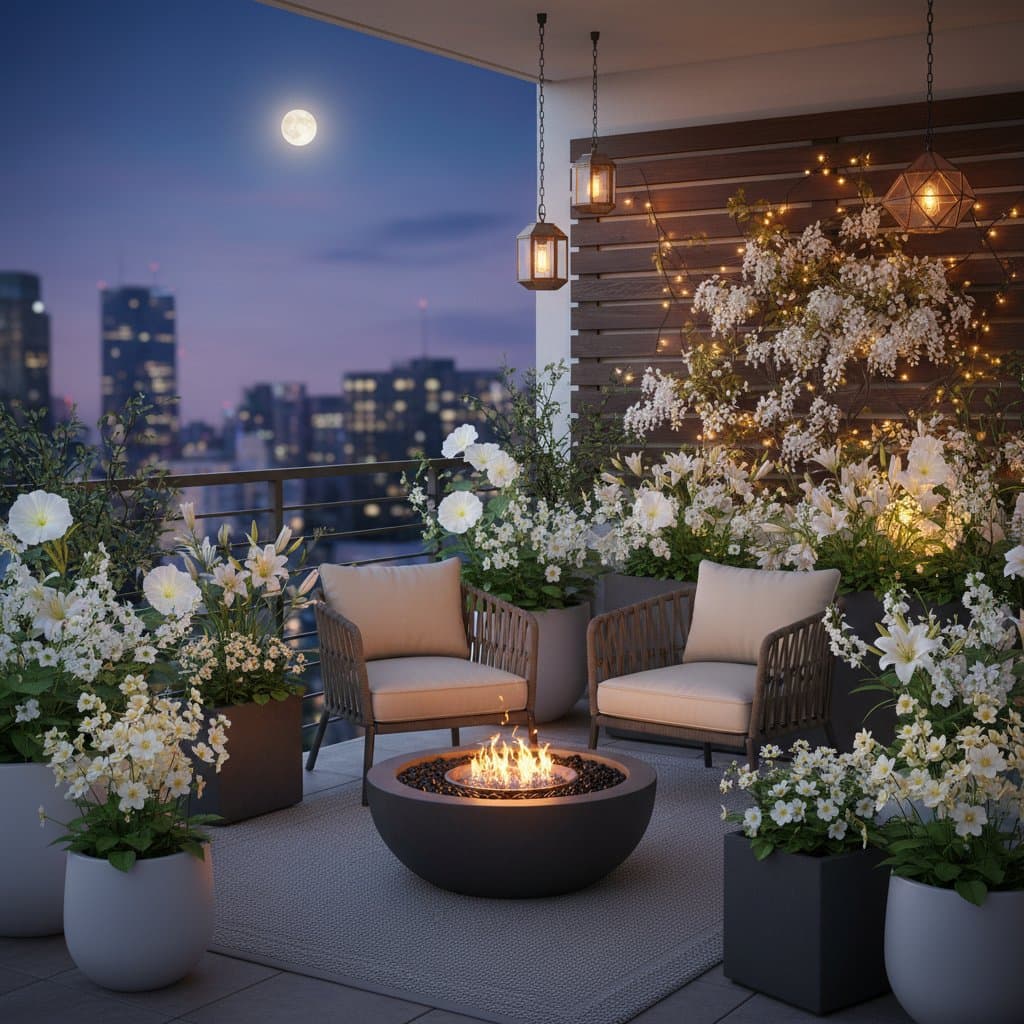
Introduction
Urban living often confines outdoor spaces to balconies or tiny patios, yet these areas hold potential for serene retreats. A night garden transforms such spots into glowing havens, where plants unfurl under moonlight and soft lights create inviting atmospheres. This guide provides practical steps to build one, emphasizing plants that bloom after sunset, thoughtful designs for limited areas, and essential care routines.
Night gardens offer more than aesthetics; they deliver calming scents and visual appeal during evening hours when urban bustle fades. With careful planning, even the smallest space can support a thriving ecosystem. Begin by assessing your balcony's conditions, such as sunlight exposure and wind patterns, to select suitable elements.
Selecting Night-Blooming Plants
Choose plants that open flowers in the evening to maximize the garden's impact. Moonflower (Ipomoea alba) climbs vigorously on trellises, producing large white blooms with a sweet jasmine-like fragrance from dusk until dawn. Its vines suit vertical spaces, reaching up to 10 feet in a season.
Night-blooming cereus (Selenicereus grandiflorus), a cactus variety, offers dramatic white flowers up to 12 inches across that last one night. Plant it in a hanging pot for easy access in tight quarters. Evening primrose (Oenothera biennis) spreads low with yellow blossoms that release a subtle lemon scent, ideal for ground-level containers.
Incorporate night phlox (Zaluzianskya ovata) for starry pink and white flowers with spicy aroma. These perennials tolerate partial shade common on balconies. Aim for three to five varieties to create layered scents and colors without overcrowding. Source healthy starts from local nurseries to ensure adaptation to your microclimate.
Designing the Layout for Airflow and Balance
Efficient arrangement prevents common issues like mildew in humid urban air. Position taller climbers like moonflower along railings or walls to draw the eye upward, freeing floor space. Cluster mid-height plants, such as evening primrose, in corner groupings for stability.
Use lightweight pots made of terracotta or resin to manage weight on balconies. Elevate them on stands for better drainage and to promote air circulation around foliage. Incorporate vertical elements like slim trellises or hanging baskets to utilize height without expanding the footprint.
Group plants by water needs: drought-tolerant cacti near edges, moisture-loving phlox in shadier spots. Leave 6 to 12 inches between containers to allow breeze flow, reducing pest risks. Sketch a simple diagram first, marking light sources and seating areas for a cohesive flow.
Illuminating Your Night Garden
Strategic lighting enhances plant silhouettes without overwhelming the natural glow. Opt for warm LED bulbs at 2700 Kelvin to mimic candlelight, casting gentle hues on petals. Solar-powered stakes or strings provide eco-friendly options that charge during the day.
Position low-voltage path lights along container edges to highlight blooms without direct glare on foliage. For hanging elements, use clip-on fixtures that attach to railings, ensuring even distribution. Avoid cool blue tones, which can attract insects; warm amber filters create a soothing ambiance.
Test setups at twilight to adjust for shadows from nearby buildings. Integrate motion-sensor lights for safety, activating only when needed. These choices not only beautify but also extend usability into cooler evenings.
Safety Tips
Verify your balcony's structural capacity before placing containers; consult building guidelines for weight limits, as saturated soil adds significant mass, often exceeding 40 pounds per large pot.
Select electrical components rated for outdoor exposure to withstand moisture and temperature swings. Employ sturdy ladders or platforms when installing overhead lights or accessing elevated planters.
Secure all fertilizers, tools, and sharp implements in locked storage to protect children and pets from accidental access.
Troubleshooting Common Issues
Leaves Turning Yellow
Overwatering or inadequate drainage often causes this symptom, leading to root rot.
Inspect pot bottoms for blocked drainage holes and clear them if necessary. Introduce a base layer of gravel or fine mesh beneath the soil to facilitate excess water escape.
Sparse or Absent Blooms
Insufficient sunlight or excessive nitrogen in fertilizers can inhibit flowering.
Relocate plants to areas receiving more evening light, or amend feeding with a phosphorus-rich bloom formula to stimulate bud formation.
Nighttime Pest Invasions
Artificial lights frequently draw insects, disrupting the garden's peace.
Switch to warm-toned bulbs that emit less attractive wavelengths, and forgo sweet baits; instead, introduce beneficial insects such as ladybugs to control populations naturally.
Leggy or Stretched Growth
Inconsistent light exposure results in elongated, weak stems.
Rotate containers every seven days to ensure uniform illumination on all sides, promoting compact, healthy development.
Maintenance Routines
Weekly Tasks
Deadhead faded flowers promptly to redirect energy toward new growth.
Examine leaves for signs of fungal spots or wilting, addressing issues early.
Clean light fixtures with a damp cloth to maintain optimal illumination.
Monthly Tasks
Trim overgrown vines to preserve airflow and prevent tangling.
Top-dress soil with organic compost to replenish nutrients without disturbing roots.
Check all railing mounts and hooks for signs of corrosion or instability, tightening as required.
Seasonal Adjustments
During peak heat, apply breathable shade cloths over sensitive plants to shield from midday sun scorch.
In colder periods, relocate frost-tender species indoors to a bright windowsill or use protective covers.
Annually replace fading solar batteries to sustain reliable performance.
Storage Solutions
Protect dormant materials by storing unused soil and tools in airtight containers, shielding them from humidity and infestations. Stack empty pots upright with separators like cardboard to avoid surface scratches or chips.
House lighting equipment in a moisture-free indoor area during off-seasons. For compact storage, collapse trellises and suspend them from wall pegs.
Label bulbs and tubers clearly with species names and anticipated flowering periods to simplify spring replanting.
Budget and Time Investment
A modest night garden assembly remains accessible for varied budgets through prioritized purchases.
Allocate 25 to 40 dollars for initial plants, covering three to five species.
Budget 60 to 80 dollars for durable containers and quality potting mix.
Reserve 40 to 70 dollars for energy-efficient lighting solutions like solar or LED units.
Overall, expect 125 to 190 dollars for a foundational setup.
Dedicate one weekend for assembly, followed by one hour weekly for upkeep. Plants typically achieve robust blooming within two months under consistent hydration and nutrition.
Seasonal Reminders
In spring, initiate growth with indoor seedlings or nursery acquisitions, evaluating balcony conditions prior to outdoor placement.
Summer demands evening watering to hydrate roots without evaporation loss; monitor for heat-induced leaf curling.
Autumn involves vine reduction and seed harvesting for future cycles.
Winter protection includes wrapping pots in insulating fabric or positioning them against walls to buffer winds.
When to Consult Professionals
For balconies with low railings, aged surfaces, or poor runoff, engage a certified structural expert to assess load-bearing before adding weight.
Seek advice from a horticulture specialist or landscape professional for plant choices tailored to site-specific factors like urban heat reflection or drafts.
Hire a qualified electrician for any fixed lighting installations to eliminate risks of electrical faults or system overloads.
Steps to Get Started
-
Draft a layout plan this evening, identifying zones for scents, hues, and relaxation.
-
Acquire three night-blooming varieties suited to your balcony's illumination.
-
Install a single mellow light and observe its interplay with indoor views.
These incremental actions gradually realize a peaceful, radiant outdoor nook.
Essential Insights
Night-blooming selections such as moonflower and evening primrose activate post-sunset, delivering fragrance and subtle beauty.
Lighting at 2700 Kelvin warms the scene, fostering relaxation over stark visibility.
Strategic spacing ensures ventilation, safeguarding plant vitality.
Ongoing care and secure positioning sustain the garden through seasons.
A compact night garden thrives on intention rather than scale. Dedicate moments to its nurture, and it will reward with tranquil evenings under starry skies, where urban noise yields to gentle, living light.