
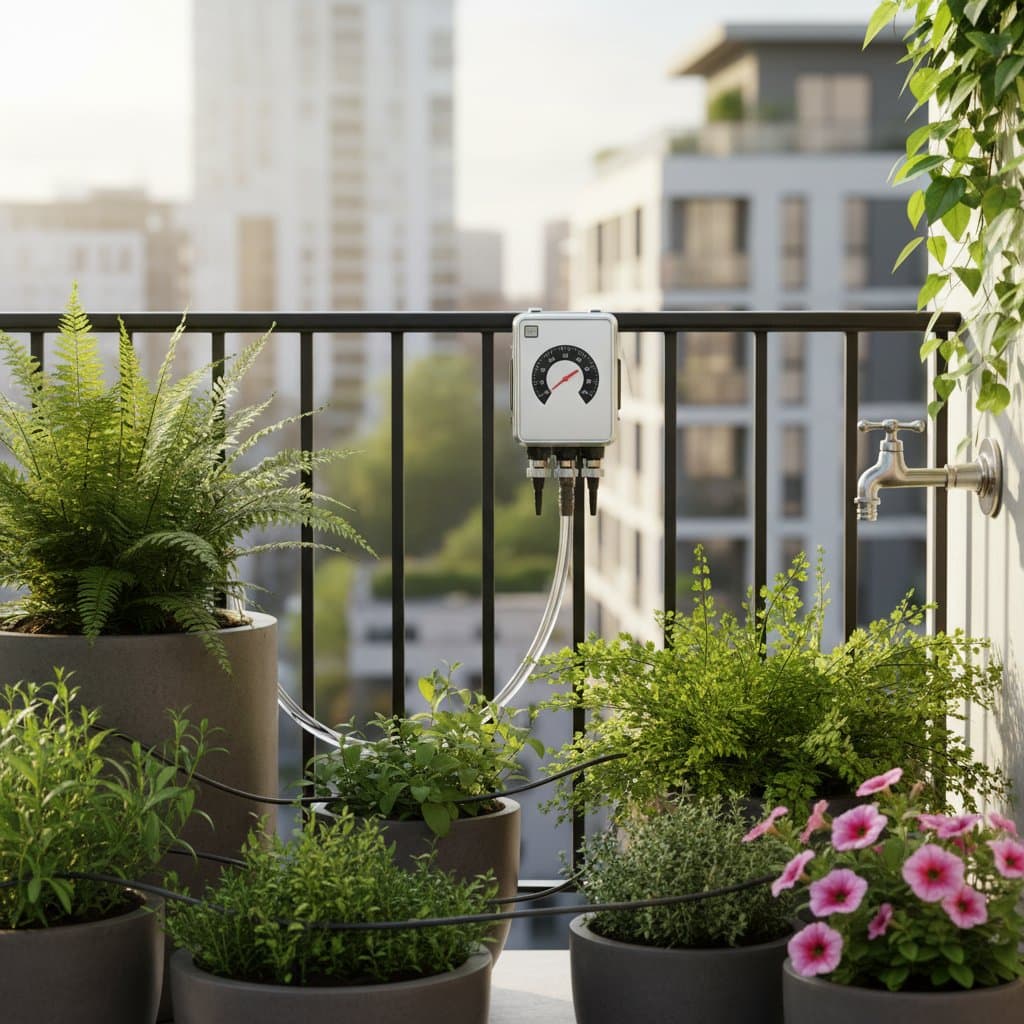
Simplify Balcony Gardening with Phone-Free Drip Irrigation
Balcony gardens offer a touch of nature in urban settings, but consistent watering often proves challenging amid busy schedules. Mechanical drip systems provide a straightforward solution that operates independently of smartphones or apps. These setups ensure plants receive precise moisture levels, reducing the need for daily checks and allowing more time to relax outdoors.
This article explains the components of a phone-free irrigation system, highlights its advantages for small-space gardeners, and provides detailed instructions for assembly and upkeep. Readers gain practical knowledge to implement this method quickly, fostering resilient container plants with minimal effort.
System Overview
A phone-free drip irrigation system relies on mechanical timers and gravity or pressure-driven tubing to distribute water evenly to potted plants. Unlike smart devices that depend on internet connectivity, this approach uses basic plumbing principles for dependable performance. Water flows through narrow tubes and emitters directly into the soil, mimicking natural rainfall without waste.
Reliability stands out as a primary advantage. Once calibrated, the system maintains a steady schedule, ideal for those who travel frequently or manage irregular routines. Gardeners report fewer instances of overwatering or underwatering, which leads to healthier root systems and vibrant foliage. Additionally, these systems conserve water by delivering it slowly to the root zone, typically using 30 to 50 percent less than manual methods. This efficiency not only lowers utility bills but also supports sustainable practices in compact urban environments.
For balcony setups, the system adapts easily to railings, shelves, or floor arrangements. It eliminates the clutter of electronic gadgets and the frustration of battery failures or software glitches. Overall, this method promotes a hands-off approach that encourages plant growth while freeing gardeners to focus on harvesting or simply enjoying the view.
Essential Tools and Materials
Assembling a basic phone-free drip system requires items available at local hardware stores, garden suppliers, or online retailers specializing in irrigation. Select durable, weather-resistant components to withstand outdoor exposure. A complete kit for a standard 10 by 5 foot balcony typically includes the following:
- One mechanical hose timer designed for outdoor faucets, with adjustable dials for daily or interval settings.
- 25 feet of flexible drip tubing, either 1/4-inch for precise runs or 1/2-inch for main lines.
- Emitters or drippers rated at 0.5 to 1 gallon per hour, depending on plant size and soil type.
- T-connectors, elbow fittings, and end caps to customize the tubing path and seal the system.
- A backflow preventer and pressure regulator to protect municipal water supplies and maintain optimal flow rates.
- Basic tools such as sharp scissors for cutting tubing and a hand trowel for securing lines near pots.
Verify compatibility among parts; most systems standardize on 1/4-inch or 1/2-inch diameters. Budget-conscious gardeners can start with a pre-packaged drip kit under 50 dollars and expand as needed. Investing in UV-resistant tubing extends the lifespan, preventing degradation from sunlight exposure.
Installation Steps
Setting up the system demands about one hour for beginners, with results that pay off immediately in reduced maintenance. Follow these steps methodically to avoid common pitfalls like uneven distribution or leaks.
Step 1: Design the Layout
Evaluate your balcony's sunlight patterns and pot positions to optimize water delivery. Identify the closest water source, such as a kitchen faucet extended via hose or an outdoor spigot. Measure the total tubing length required, adding 10 percent extra for curves, overlaps, and adjustments. Sketch a simple diagram to map the main line and branches, ensuring each pot receives at least one emitter.
Step 2: Install the Timer
Secure the mechanical timer to the faucet thread by hand, achieving a snug fit without over-tightening, which could damage plastic components. Program the timer for initial trials: set it to activate once daily for 10 to 15 minutes, based on average summer conditions. Test the timer's mechanism manually to confirm it opens and closes smoothly, regulating water pressure effectively.
Step 3: Lay Out the Tubing
Attach the main drip line to the timer outlet using a barbed connector, pushing firmly until seated. Route the tubing along balcony edges or under pots, securing it with plastic clips spaced every 2 feet to prevent sagging or tangling. For elevated planters, use stakes or weights to anchor the line, maintaining a slight downward slope for gravity assistance if pressure is low.
Step 4: Position the Emitters
At each pot location, snip the tubing cleanly with scissors and insert a T-connector to branch off a short 6-inch leader line. Affix an emitter to the end of this branch, punching a small hole in the main tube if using inline models. Choose 0.5 gallon per hour emitters for shallow-rooted herbs like basil or mint; opt for 1 gallon per hour for thirstier plants such as tomatoes in larger containers. Position emitters near the soil surface, avoiding direct contact with foliage to minimize evaporation.
Step 5: Test and Fine-Tune
Activate the system manually at the timer to observe water output. Droplets should emerge steadily from emitters, soaking the soil without pooling or spraying. Monitor several pots for 10 minutes, then check moisture levels by inserting a finger 2 inches into the soil. Adjust timer duration upward by 2 to 3 minutes if dryness persists, or reduce it for clay-heavy soils that retain water longer. Repeat testing over a few days to achieve uniform hydration across all plants.
Safety Considerations
Prioritize precautions to safeguard both the system and your living space. Position all components away from electrical outlets or indoor extensions to prevent shocks from moisture. Install drip trays beneath pots on balconies without drainage to capture excess runoff, directing it toward safe disposal. Always incorporate a pressure regulator, rated below 25 pounds per square inch, to protect delicate tubing from bursts under high municipal pressure.
Store spare parts in a waterproof container to avoid corrosion. During setup, wear gloves when handling fittings to keep connections clean and functional. These measures ensure long-term safety and reliability, particularly in windy or rainy urban conditions.
Common Troubleshooting
Issues arise occasionally, but most resolve with simple diagnostics. For uneven watering, inspect the entire line for kinks, blockages, or air pockets; flush by removing the end cap and running water briefly. Clean clogged emitters by submerging them in a vinegar-water solution for 10 minutes, then rinsing thoroughly to dissolve mineral deposits.
If flow remains low, verify the timer's valve fully engages and check for partially closed faucets upstream. In gravity-fed variants, elevate the reservoir bucket at least 2 feet above the highest pot to generate sufficient pressure. Address leaks by replacing any cracked sections of tubing and hand-tightening loose connectors; apply plumber's tape to threaded joints for added security.
Persistent problems, such as repeated timer failures, may indicate incompatible water quality; consider a filter attachment to remove sediments. Document adjustments in a garden journal to track patterns and refine performance over time.
Ongoing Maintenance and Storage
Regular care preserves the system's efficiency and extends its usability. Flush lines monthly by detaching the end cap and allowing water to run freely for two minutes, clearing debris before it accumulates. Inspect emitters quarterly, replacing any that deliver inconsistent drips to maintain even coverage.
As winter approaches, disassemble the setup to protect against freezing. Disconnect the timer, drain all tubing by tilting it downward, and coil lines loosely to avoid kinks. Store components in a cool, dry location, such as a garage shelf, and remove any batteries from the timer to prevent leakage. This preparation ensures parts remain pliable and ready for spring reactivation.
Cost Breakdown and Time Investment
A foundational phone-free drip system costs between 40 and 80 dollars, covering timer, tubing, and emitters for up to 10 pots. Ongoing expenses stay low, with individual replacement emitters under one dollar and timers lasting two to three seasons under normal use. Installation requires roughly one hour, including planning and testing, making it accessible for novice gardeners.
Savings accumulate through water reduction and prevented plant losses, often offsetting initial outlay within one growing season. Compare this to app-based alternatives, which may incur subscription fees or device upgrades, highlighting the value of mechanical simplicity.
Adapting to Seasons
Plants' needs fluctuate with weather, demanding periodic system tweaks. During heatwaves, increase watering frequency to twice daily for short bursts, monitoring for wilting leaves or curled edges as early indicators. In fall and winter, dial back to every other day or less to avoid soggy soil and root rot, especially for dormant perennials.
Before extended absences, conduct a full soil moisture test across all pots and adjust accordingly. Integrate mulch layers around emitters to retain moisture longer, further enhancing efficiency in varying climates.
Prepare for Professional Assistance
Most balcony installations proceed without expert help, but consult a plumber if your building's water pressure exceeds 40 pounds per square inch or if faucet modifications are needed. Local garden centers often offer free consultations for custom layouts, ensuring compliance with urban regulations on outdoor watering.
Implement Your System Today
Begin by assessing your balcony's dimensions and water access points to select appropriately sized components. Purchase a mechanical timer and basic drip kit tailored to your pot count, then dedicate an afternoon to assembly and initial testing. With this setup in place, anticipate halved watering time and thriving plants that enhance your urban oasis, ready for the next getaway without worry.