
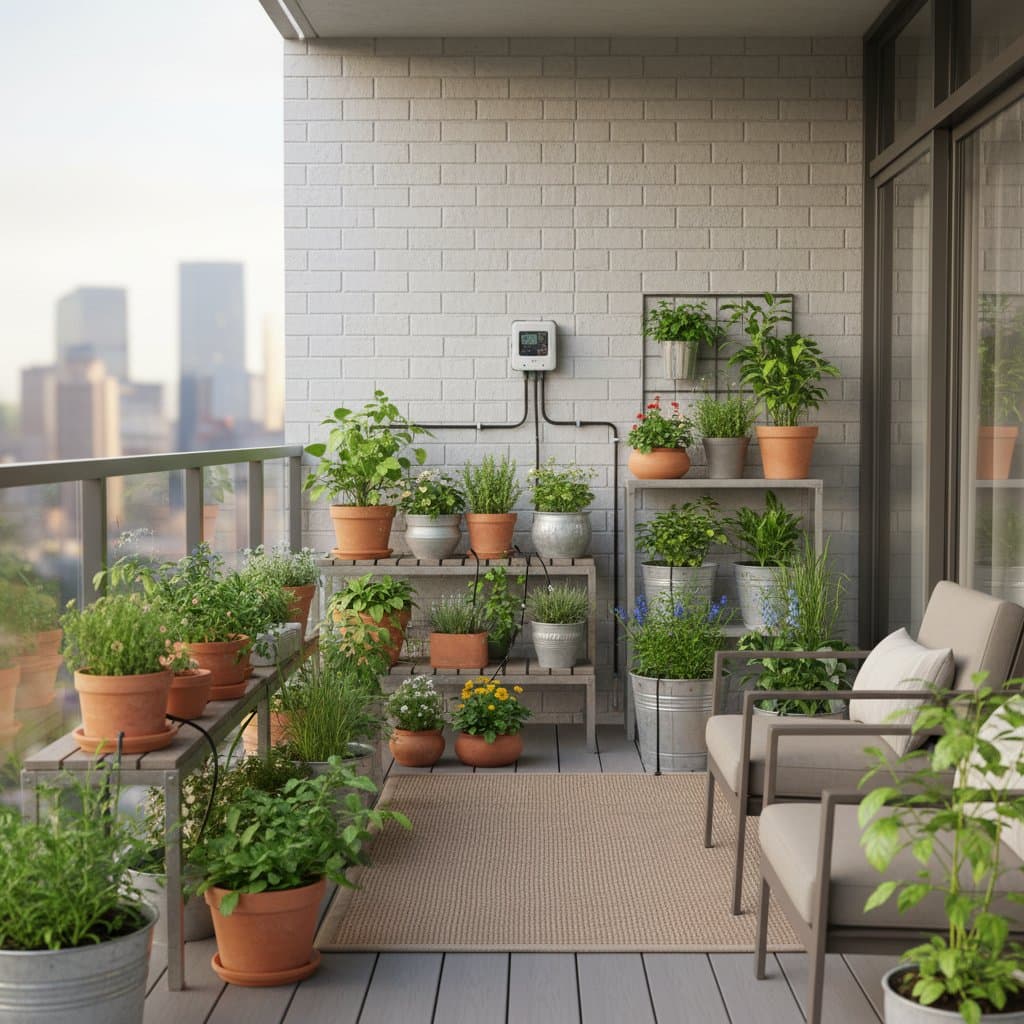
Step 4: Add Distribution Lines
Use the punch tool to create precise holes in the main tubing, spacing them according to your pot layout. Insert the barbed ends of the 1/4-inch distribution lines firmly into these holes, ensuring a secure fit to prevent leaks. For each pot, run a short segment of line directly to the base, and employ T-connectors when branching to serve two adjacent pots efficiently.
Secure every distribution line with landscape stakes or clips to maintain position, allowing slight slack to accommodate pot relocation without strain. Position lines away from heat sources such as metal railings or direct sunlight exposure, which can degrade the tubing over time and lead to cracks.
Consider the overall layout: group pots by water needs to minimize line lengths and optimize flow. This approach simplifies adjustments and ensures even distribution across your balcony setup.
Step 5: Install Drippers
Affix one adjustable dripper to the terminus of each 1/4-inch line, positioning it close to the plant's base for targeted soil penetration. Avoid placing drippers against the pot rim, as this can cause uneven wetting or runoff. Activate the system briefly to test flow rates, then calibrate each dripper to deliver a gentle pooling of water without excessive splashing or erosion.
For larger pots that hold more soil volume, install two drippers spaced evenly to cover the root zone comprehensively. Secure the additional dripper using a small plastic clip or tie to prevent shifting during wind or handling.
Select drippers with flow rates between 0.5 and 2 gallons per hour, adjustable based on plant type—lower for succulents, higher for thirsty vegetables. This customization promotes healthy growth while conserving water resources.
Step 6: Test and Adjust
Initiate a manual cycle on the timer to conduct a comprehensive trial run. Inspect the entire system by walking along the lines, noting any leaks, clogs, or irregular flow patterns. Address issues promptly: tighten loose connectors or reseat tubing more deeply into fittings if spraying occurs.
Measure the duration required to saturate the top inch (2.5 cm) of soil in a representative medium-sized pot, using a simple soil probe or finger test. Program the timer accordingly for daily cycles; in typical balcony environments, cycles of 8 to 15 minutes per zone suffice for most plants during peak growing seasons.
Account for environmental factors like sun exposure and humidity when setting times—shadier spots may require less, while windy conditions could necessitate slight increases. Repeat tests after initial runs to fine-tune for consistency.
Step 7: Secure and Label
With the system performing reliably, fasten all tubing using UV-resistant clips or zip ties at intervals of every 12 to 18 inches to withstand balcony breezes. Attach durable labels to each zone's main line, identifying groups such as "Herb Collection," "Succulent Array," or "Vegetable Patch." These markers facilitate quick reference when programming or troubleshooting the timer.
Incorporate color-coded tags for visual distinction if managing multiple zones, enhancing organization for repeated use. Store spare labels in your maintenance kit for easy updates as your garden evolves.
Troubleshooting Common Issues
Uneven Watering:
Inspect for clogged drippers or kinked tubing, which disrupt flow. Detach the affected dripper, flush it with clean water for several seconds, and reinstall securely. Excessive saturation in lines indicates over-pressurization; shorten watering durations or divide into additional zones to balance output.
Low Pressure at Distant Pots:
Divide the main line into two or more shorter segments to equalize pressure. Install a Y-splitter directly at the faucet outlet to supply parallel runs, ensuring uniform delivery to all areas of your balcony.
Leaks at Connectors:
Trim away the compromised section of tubing and insert a fresh fitting. If problems continue, soften the tubing ends by immersing them in warm water for 30 seconds prior to reconnection, improving seal integrity without tools.
Drippers Detaching Under Pressure:
High pressure often causes this; verify that the pressure regulator's rating aligns with your timer's specifications, typically 25 to 30 PSI for residential setups. Replace if mismatched to safeguard the system.
Address issues methodically, starting with visual checks and progressing to component tests. Regular vigilance prevents minor problems from escalating into system failures.
Budget and Time Considerations
Assemble the complete system in two to three hours after gathering materials, assuming a basic familiarity with tools like scissors and pliers. Total expenses range from $80 to $150, encompassing the timer, pressure regulator, filter, tubing, and fittings.
Procure extra tubing in bulk rolls to cut costs and allow for extensions. Reuse tubing across seasons by cleaning thoroughly; the timer and filter endure multiple years with proper dry storage during off-periods.
Prioritize quality in the pressure regulator and filter, as these components shield against damage from debris or surges, ultimately protecting your investment and plants. Skip shortcuts here to avoid costly repairs later.
Ongoing Maintenance Practices
Examine the system weekly throughout the growing season, focusing on drippers for blockages and pots for over- or under-watering signs like wilting or standing water. Clear debris from the filter screen promptly to maintain flow.
Monthly, disassemble the filter and rinse under steady running water to remove sediment buildup. Flush the lines seasonally by operating the system for five minutes with drippers removed, clearing potential residues without disassembly.
As temperatures drop, drain all water from tubing by elevating ends and blowing air through if needed, then relocate the timer indoors. Coil and store tubing in a sealed plastic container to shield from frost and prolong usability into future springs.
Incorporate a seasonal checklist: inspect connections in spring, monitor during summer, and prepare for winter shutdown. This routine extends system life and ensures reliable performance year after year.
Practical Storage Solutions
Organize fittings, T-connectors, end caps, and spare drippers in a compartmentalized plastic organizer, labeling compartments clearly for swift access during repairs. This setup minimizes downtime when addressing issues.
Mount the timer's instruction manual and a hand-drawn setup schematic on a nearby clipboard for convenient consultation without searching. Update the diagram as modifications occur to reflect your current configuration.
Plan for growth by pre-punching and capping a few extra holes in the main line. When adding pots, simply uncap, extend with new tubing, and integrate seamlessly, streamlining expansions without starting over.
Professional Assistance Options
Engage a plumber or irrigation expert for connections to indoor faucets or routing permanent lines through walls, ensuring compliance with building codes. Request recommendations for quick-connect adapters that enable seasonal detachment for winter protection.
In buildings with variable water pressure, professionals can assess and install a compact booster pump to deliver steady flow, particularly beneficial for multi-zone setups on higher floors.
Consult locals familiar with urban constraints; they often provide tailored advice for balcony-specific challenges like limited space or shared utilities.
Implementing and Expanding Your System
Begin with a single zone covering 10 to 15 pots to observe soil moisture responses over a week, adjusting timings based on real-world performance. This phased approach builds confidence before full deployment.
Progress to additional zones once initial results prove consistent, applying labels and documenting schedules on a waterproof list affixed near the faucet for at-a-glance management.
With each new plant addition, attach an extension line, calibrate the dripper output, and log adjustments. Over successive weekends, your setup evolves into a self-sustaining garden that thrives unattended, freeing you for leisurely enjoyment or short getaways.
This drip irrigation method fosters resilient balcony greenery, optimizes water efficiency, and reclaims precious time, allowing focus on the creative joys of urban cultivation.