
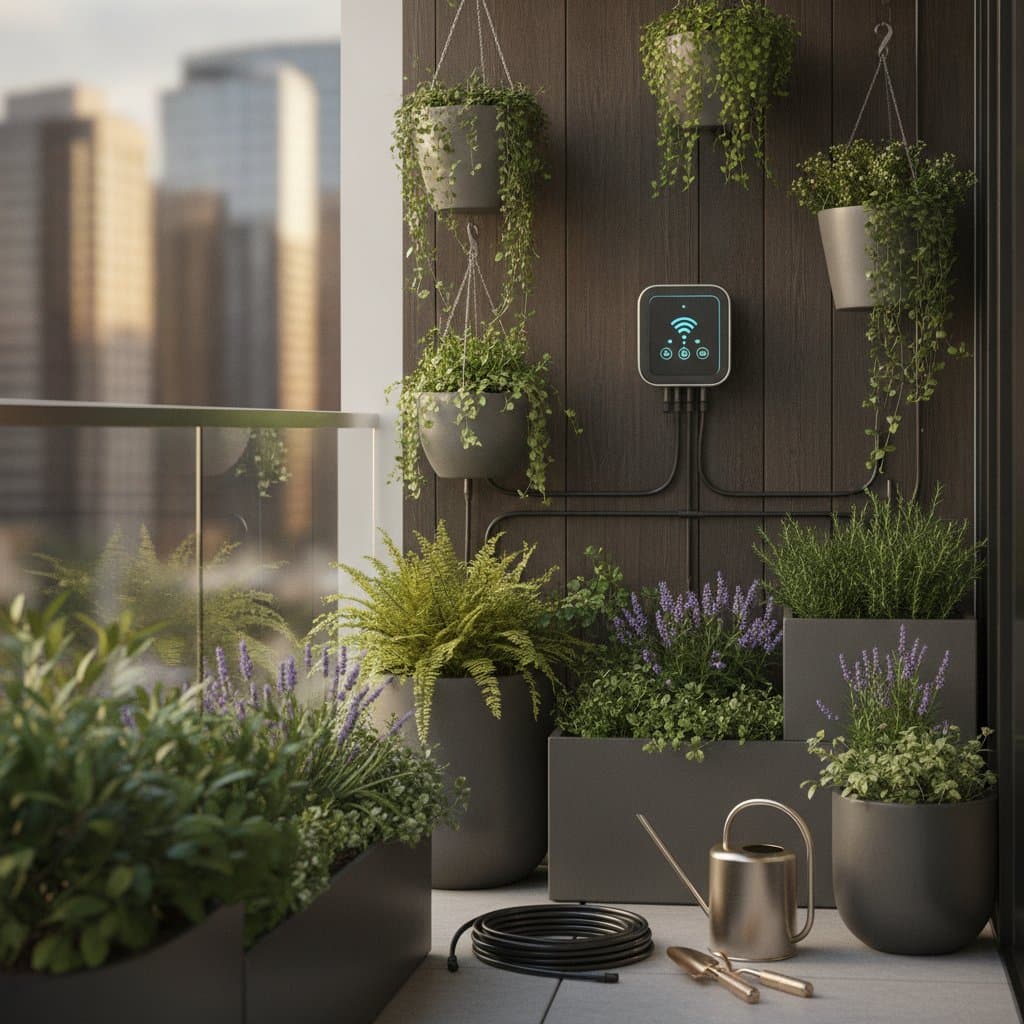
Effortless Balcony Gardens Using Micro Drip AI Systems
A micro drip AI system delivers water directly to plant roots through small tubes and emitters. Sensors track soil moisture along with weather data to activate flow only when plants require it. This approach produces steady growth while cutting water waste.
System Basics
The setup consists of a controller, polyethylene tubing, emitters, and optional moisture sensors. It connects to an outdoor spigot and runs along railings or walls to reach each planter. Many users record water savings between 40 and 60 percent compared with manual watering because the system targets soil rather than foliage.
The controller learns typical moisture patterns for each plant type and adjusts schedules automatically. Balcony gardeners gain freedom to travel or work extended hours without daily checks.
Required Materials
- One AI irrigation controller or compatible smart hub
- Twenty five feet of flexible polyethylene main line tubing
- Ten to twenty adjustable emitters rated at 0.5 to 1 gallon per hour
- Barbed connectors and T joints for branches
- A 20 to 30 psi pressure regulator
- A backflow preventer and inline filter
- Two to four soil moisture sensors
- Mounting clips and stakes
Scissors, pliers, and a smartphone complete the list. Measure planter positions before purchase to avoid excess tubing.
Installation Sequence
Sketch planter locations and note the spigot position. Cut the main line to run along walls with six inches of clearance from walkways. Attach the backflow preventer first, followed by the filter and pressure regulator.
Secure the main line with clips every two to three feet. Insert emitters into feeder lines that reach each pot, placing one emitter in small containers and two in planters wider than twelve inches. Mount the controller near power or a solar panel, then insert sensors and pair them through the app.
Flush the line for one minute before the first test cycle. Check each emitter for even flow and adjust as needed. Choose either timed intervals or full AI mode that refines itself after several cycles.
Routine Checks and Adjustments
Clean the filter monthly and flush lines every two weeks. Soak emitters in vinegar solution to remove mineral scale. Inspect tubing for sun damage each season and replace sections that show cracks.
Recalibrate sensors at the start of spring and fall. Update controller firmware when prompted to maintain accurate learning algorithms.
Winter Storage
Drain all tubing before temperatures drop below freezing. Coil lines loosely and store them indoors with sensors and the controller. Reconnect components in spring and run a full test before plants resume active growth.
Cost and Time Expectations
A complete system for ten to twenty planters ranges from 120 to 250 dollars. Installation requires two to three hours including testing. Replacement parts remain inexpensive, and power draw stays below five watts.
Optimizing Plant Health Year Round
Monitor growth weekly during the first month to confirm moisture targets match each species. Herbs tolerate drier intervals while ferns need steadier dampness. Fine tune emitter flow rates and sensor thresholds until the garden maintains lush foliage with minimal intervention.