
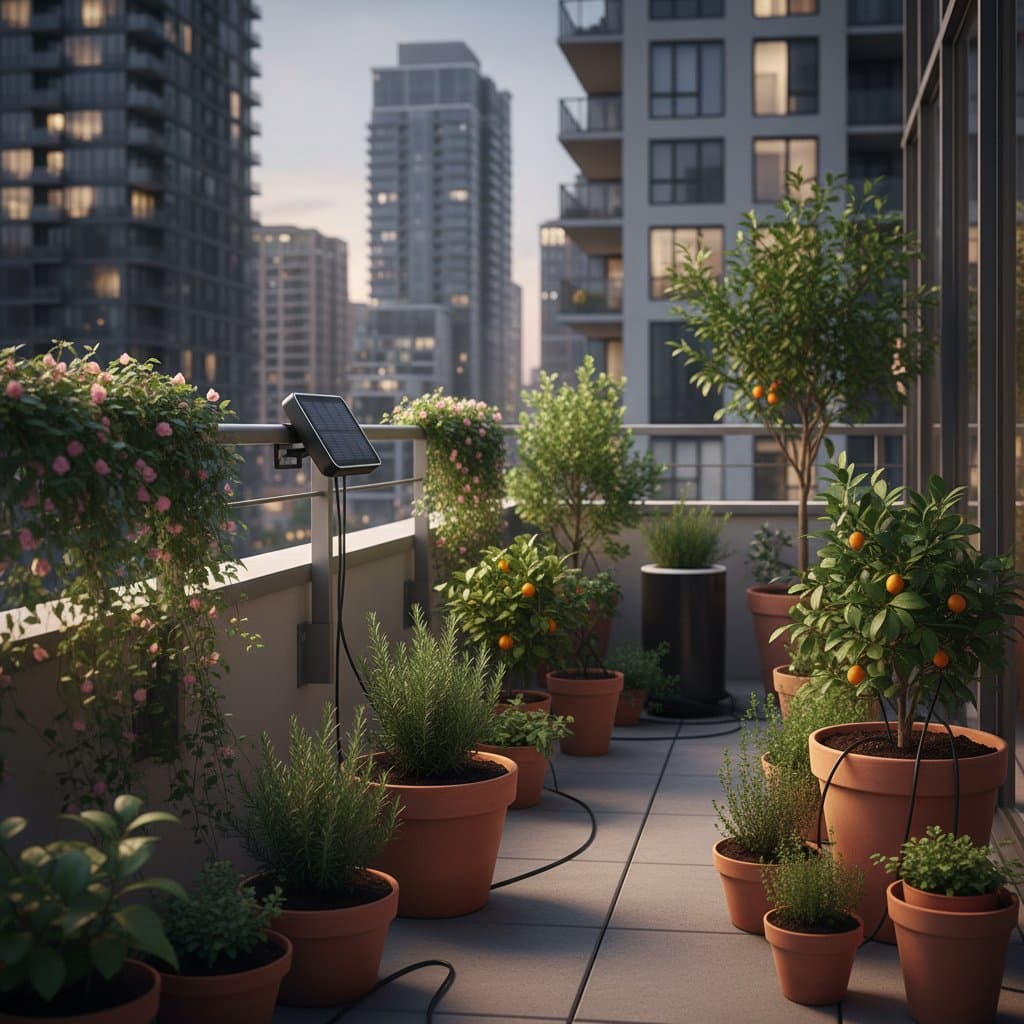
Understanding Solar-Powered Drip Irrigation for Balconies
Balcony plants require regular moisture to flourish, yet manual watering demands time that urban dwellers rarely have. Solar-powered drip irrigation systems solve this by harnessing sunlight to operate a compact pump, which distributes water through narrow tubes to each plant's root zone. This method ensures even hydration without the need for electrical outlets, timers, or frequent intervention, resulting in healthier foliage and reduced water waste.
These systems typically include a solar panel that charges a rechargeable battery during daylight hours. The battery powers the pump intermittently, releasing water at controlled intervals based on a built-in timer. For balcony setups, this approach proves ideal due to its portability and low maintenance, allowing users to focus on enjoying their green space rather than tending to it constantly.
Essential Components and Selection Guide
Assembling a solar drip system requires selecting reliable parts suited to your balcony's size and plant variety. Begin with a solar pump kit that features an integrated timer and battery for automated operation. Look for kits rated for 10 to 20 pots, with pumps delivering 0.5 to 1 gallon per hour to match typical balcony needs.
A sturdy water reservoir forms the system's core; opt for a 3- to 5-gallon container with a secure lid to prevent evaporation and debris entry. Drip tubing, usually 1/4-inch diameter polyethylene, should measure 40 to 60 feet to accommodate various layouts without excessive kinking. Include pressure-compensating emitters, one per pot, that release water at 0.5 to 2 gallons per hour depending on soil type and plant size.
Connectors such as barbed tees, elbows, and end caps ensure a leak-free network. Mounting hardware like UV-resistant clips secures tubing along railings or walls. For water quality, incorporate an inline filter if sourcing from municipal taps or harvested rain to prevent clogs from minerals or sediment.
Step-by-Step Installation Process
Installation begins with site assessment: position the solar panel in full sun for at least six hours daily, ideally south-facing on the balcony. Mount it securely using provided brackets to avoid shading from plants or structures.
Fill the reservoir with clean water and place it in a shaded, stable spot to inhibit algae growth. Connect the pump to the reservoir's bottom via a weighted intake hose, ensuring it reaches the water level even when partially full. Attach the main tubing line to the pump outlet, then run secondary lines to each pot using tees for branching.
Install emitters at the base of each plant, inserting them into the soil or pots for direct root delivery. Punch holes in the tubing with the kit's tool for precise fits. Test the system by activating the pump manually; observe for uniform flow and adjust timer settings—start with 10- to 15-minute cycles every 12 hours, tweaking based on weather and plant response.
Secure all tubing with clips to prevent movement from wind. The entire process typically takes 1.5 to 2.5 hours, depending on complexity.
Safety Considerations During Setup and Use
Prioritize safety to protect both the equipment and balcony environment. During assembly, handle the solar panel only in dry conditions; disconnect components before wiring to avoid short circuits. Position reservoirs away from edges to prevent tipping, and support their bases when moving to distribute weight evenly.
Use filtered water to safeguard emitters from blockages that could lead to overwatering in one area and drought in another. Route tubing clear of heat sources or outlets, as high temperatures can degrade plastic materials over time. For multi-level balconies, ensure lines do not create trip hazards.
Regularly inspect connections for wear, especially after storms, to maintain system integrity.
Cost Analysis and Efficiency Benefits
A basic solar drip kit for 8 to 12 pots costs between $50 and $90, including the pump, panel, and basic tubing. Additional emitters and extension lines add $15 to $25 for larger arrangements. Compared to traditional hose-end systems, solar options eliminate electricity costs and reduce overall water consumption by up to 70 percent through targeted delivery.
Initial setup demands about two hours, but ongoing operation saves 30 to 60 minutes weekly versus hand watering. In low-sun areas, extend the solar panel's reach with a 10-foot cable or supplement with a portable solar charger. Over a year, these systems pay for themselves through time savings and conserved resources.
Seasonal Maintenance Strategies
Adapting the system to changing weather ensures optimal performance year-round.
Spring Activation
After winter, inspect all components for damage from cold exposure. Flush lines with a vinegar solution to clear residue, then reconnect and test flow. Set the timer for brief, frequent cycles to accommodate cooler, moister conditions, gradually increasing as growth accelerates.
Summer Optimization
Monitor reservoir levels closely during heatwaves, refilling every 2 to 3 days. Shade the container with a breathable cover to maintain cool water temperatures and deter bacterial growth. Elevate emitters slightly if soil compacts, ensuring water reaches roots without surface pooling.
Fall Preparation
As daylight shortens, extend intervals between cycles to match reduced evaporation. Clear debris from emitters weekly to prevent autumn leaf interference. Drain and dry the system partially if frost threatens, protecting the pump from freezing.
Winter Management
For evergreen or cold-tolerant plants, operate manually on sunny days with minimal water. Disassemble non-essential parts, clean thoroughly, and store in a cool, dry location. Lubricate moving components with silicone spray before shutdown to ease spring reuse.
Ongoing Care and Troubleshooting
Routine checks keep the system reliable. Weekly, verify battery charge via indicator lights and clean the solar panel with a soft cloth to maximize efficiency. If flow weakens, disassemble emitters and soak in warm soapy water to remove buildup.
Common issues include low battery from cloudy periods—address by repositioning the panel—or tubing leaks, fixed by replacing worn sections. Track plant health: wilting signals insufficient watering, while yellowing leaves may indicate over-saturation, adjustable via timer reductions.
Organize spares in a divided toolbox: label compartments for emitters, connectors, and filters. This setup streamlines repairs and seasonal transitions.
Expert Recommendations for Peak Performance
Select kits from reputable brands like Rain Bird or Orbit, known for durable solar components. Pair with moisture-sensing probes for advanced automation, integrating soil data to fine-tune cycles. For vertical gardens, use adjustable stakes to position emitters at varying heights.
Experiment with fertilizer injectors in the reservoir for nutrient delivery alongside water, boosting growth without extra applications. In windy urban settings, reinforce mounts with zip ties for stability. These enhancements elevate basic systems into comprehensive balcony solutions.
Achieving Lasting Balcony Greenery
Implementing a solar-powered drip irrigation system transforms balcony maintenance from a task into a seamless routine. Users report lusher plants, halved water bills, and reclaimed leisure time. With proper setup and care, this technology supports sustainable urban gardening, fostering vibrant outdoor retreats season after season.