
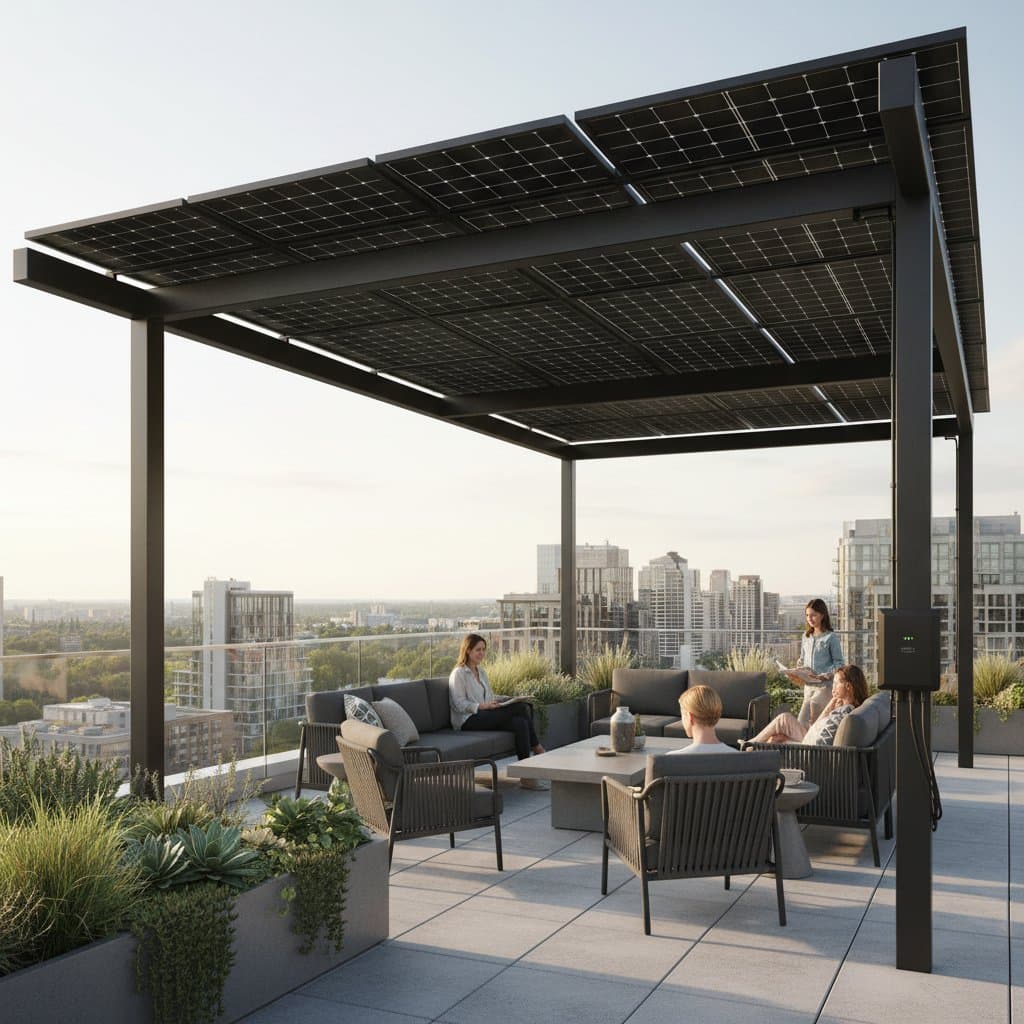
Solar Pergolas: Sustainable Power for Rooftop Oases
Homeowners seek shade, comfort, and reduced energy expenses. A solar pergola delivers these elements by converting sunlight into electricity while forming a serene outdoor area. This structure achieves a straightforward objective: it transforms a rooftop into both a relaxing haven and a source of renewable energy. The following sections explain the nature of a solar pergola, its significance, and the process for planning and installing one securely.
Overview
A solar pergola consists of a freestanding or attached framework equipped with solar panels in place of a solid roof. These panels capture sunlight to produce electricity for residential or small commercial use. The open lattice configuration allows filtered light to pass through, providing shade in areas where space constraints exist alongside abundant sunlight exposure.
The primary advantage lies in its dual functionality. It creates a shaded outdoor environment and generates renewable energy within the same area. Homeowners often apply this power to offset demands from lighting, appliances, or heating, ventilation, and air conditioning systems. In certain utility programs, surplus energy returns to the grid, earning credits.
Additionally, a solar pergola moderates rooftop temperatures. The shading effect diminishes heat absorption, which lowers cooling expenses and safeguards roofing materials from degradation. Options in materials such as wood, steel, or aluminum allow integration with contemporary aesthetics, aligning with individual preferences and financial considerations.
Tools and Materials
Constructing or overseeing the construction of a solar pergola demands a combination of structural and electrical components. The following list details essential items for the builder or professional installer:
- Pergola frame: pressure-treated wood, galvanized steel, or powder-coated aluminum.
- Solar panels: 10 to 20 units, each rated at 300 to 400 watts.
- Mounting hardware: brackets, rails, and fasteners suitable for rooftop applications.
- Inverter: device to convert direct current to alternating current for household compatibility.
- Wiring kit: conduit, cables, and connectors engineered for exterior durability.
- Anchors and supports: concrete footings or rooftop ballast blocks for stability.
- Safety equipment: harness, gloves, non-slip footwear, and protective eyewear.
A certified electrician must manage all wiring and integration with the home electrical system. Individuals with carpentry expertise and familiarity with rooftop protocols may handle the framing as a do-it-yourself endeavor.
Steps
1. Evaluate Your Roof
Verify that the roof surface remains level or features a mild slope, with sufficient height for clearance and panel inclination. Allocate a minimum of 10 by 12 feet for a compact pergola. Ensure the roof supports an additional load of 4 to 6 pounds per square foot from the combined structure and panels. Engage a structural engineer if uncertainties arise regarding capacity.
2. Assess Sunlight and Orientation
Employ a solar trajectory application or compass to determine optimal positioning. Orient panels southward in typical locations, or adjust slightly to the southeast or southwest to mitigate shading issues. Target at least 6 hours of unobstructed sunlight each day. Account for obstructions like mature trees, chimneys, or adjacent structures by pruning or incorporating them into the design.
3. Design the Frame
Draft a layout for the pergola, specifying the quantity of support posts, overall height, and beam intervals. Incorporate a 10- to 15-degree tilt to facilitate water runoff and maximize energy collection. Select materials that harmonize with the rooftop's existing appearance, such as cedar for a natural warmth or matte black steel for sleek modernity.
4. Secure the Structure
Employ code-approved anchors or ballast blocks to resist wind forces. For flat roofs, refrain from penetration unless a specialist validates waterproofing techniques. Apply flashing and weather-resistant sealants at all junctions. A firm foundation promotes both safety and consistent panel operation.
5. Install the Solar Panels
Position the panels prior to securing them, ensuring adequate spacing and cable access. Attach them to rails or brackets per the manufacturer's guidelines. Route wiring neatly within protective conduit. Maintain narrow gaps between panels to enhance ventilation and dissipate heat.
6. Connect the Electrical System
A licensed electrician performs this phase exclusively. The professional connects the panels to the inverter and subsequently to the primary electrical panel. Position the inverter on a nearby wall or in an accessible utility space. Obtain necessary permits and schedule inspections to verify adherence to local codes.
7. Test and Monitor
After integration, examine the inverter's interface or monitoring application to validate power generation. Standard installations yield 2 to 5 kilowatts, sufficient for illuminating spaces, operating fans, and running electronic devices. Observe output over several days to confirm reliability. Modify the tilt angle or perform cleaning if production declines.
Safety Tips
- Position a sturdy ladder and utilize a harness when approaching roof perimeters.
- Route wires away from abrasive edges and postpone work during inclement weather.
- Deactivate relevant electrical circuits prior to attaching components.
- Fasten tools securely to avoid slippage from the roof surface.
- Refrain from walking on panels, as the glass surface risks fracturing under foot pressure.
Troubleshooting
Low Power Output: Remove debris from panels using mild soap, water, and a soft-bristled brush. Accumulations of dust or avian waste can reduce efficiency by as much as 15 percent.
Water Leaks: Inspect penetration sites for intact seals. Reinforce with flashing tape and roofing cement as required.
Panel Movement: Fasten mounting hardware if vibrations occur during gusts. Substitute any compromised bolts immediately.
Inverter Errors: Initiate a reset following the device's manual. Summon the installer or an electrician if alerts continue.
Maintenance
Solar pergolas require routine upkeep to sustain peak performance:
- Clean panels biannually or following periods of intense pollen.
- Examine wiring quarterly for evidence of deterioration or oxidation.
- Reapply UV-resistant coating to wooden frames every three to five years.
- Reinforce fasteners and evaluate anchors after significant weather events.
Maintain unobstructed access around the structure to optimize airflow and sunlight exposure. Consistent attention preserves the system's value and ensures uninterrupted energy production.
Storage
During winter, relocate outdoor furnishings or decorative items to sheltered locations to maintain their condition. The pergola structure demands no disassembly, though protecting exposed electrical outlets and disconnecting peripherals proves advisable. For detachable shading elements beneath the panels, launder and air-dry them thoroughly before storage to avert mold growth.
Budget and Time
Expenses for a solar pergola fluctuate based on dimensions and material selections:
- Structure materials: 8 to 15 dollars per square foot for wood or aluminum variants.
- Solar panels and inverter: 2 to 4 dollars per watt for complete installation.
- Labor: 3,000 to 8,000 dollars for expert assembly, scaled to project intricacy.
A modest 3-kilowatt configuration on a rooftop may total 10,000 to 14,000 dollars prior to applicable rebates. Timeline estimates range from two weekends for self-assembled framing to two weeks for comprehensive professional execution.
When to Call a Pro
Engage specialists under these circumstances:
- Complex roof configurations or ambiguous load-bearing assessments.
- Electrical integrations exceeding basic plug-in solutions.
- Aspirations for battery storage or grid interconnection.
When selecting contractors, pose these inquiries:
- Do you hold certification for solar electrical installations in this jurisdiction?
- What guarantees apply to the panels and inverter?
- How will you safeguard the roof's waterproofing during attachment?
- Do you manage permitting and regulatory inspections?
Affirmative responses facilitate informed comparisons and avert unforeseen complications.
Seasonal Reminders
In summer, address dust accumulation promptly, cleaning panels in the early morning when surfaces remain cool. Winter demands gentle snow removal with a soft broom; allow ice to thaw naturally as panels absorb sunlight. Avoid abrasive implements or de-icing agents.
Ahead of high winds, confirm anchor integrity and secure lightweight adornments like string lights or planters with clips rather than penetrative fasteners to prevent frame damage.
Your Next Steps
Initiate the process with these measures:
- Measure available roof area and diagram potential pergola placement, avoiding interference with ventilation or natural light sources.
- Obtain a solar production forecast; numerous providers supply complimentary digital tools to project financial benefits.
- Finalize the aesthetic and functional design, prioritizing harmony with your residence and ease of upkeep.
These actions establish a roadmap toward a rooftop that generates energy rather than merely consuming it.
Realizing the Benefits
A solar pergola merges leisure with environmental responsibility effectively. It repurposes underutilized rooftop space into a shaded sanctuary and a reliable power generator. Expect 2 to 5 kilowatts of renewable electricity, diminished cooling expenditures, and elevated property appeal.
The outlined approach equips you to design, install, and sustain this feature securely. Prioritize robust construction, protected electrical pathways, and periodic inspections, whether delegating to experts or contributing personally. Each installed panel contributes to a more temperate, serene, and energy-efficient living environment, yielding enduring returns through thoughtful preparation.