
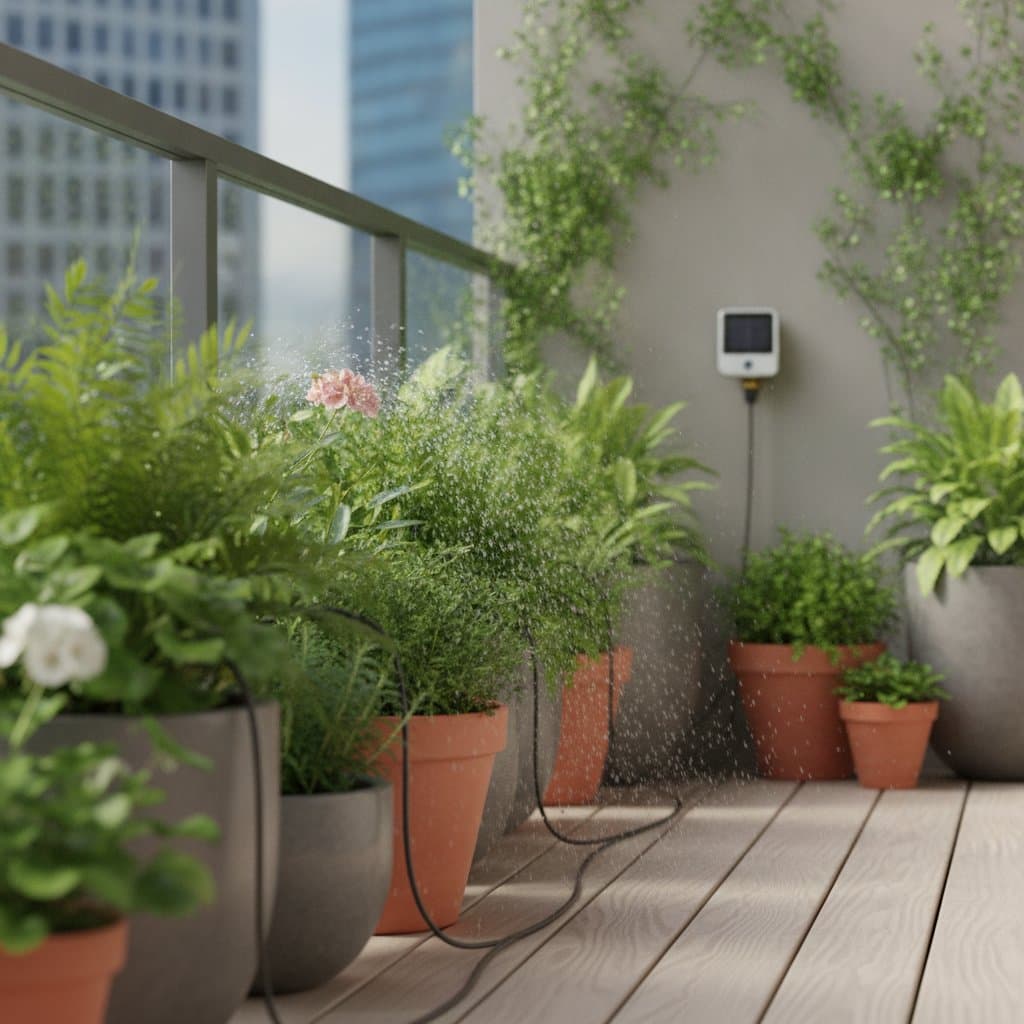
Micro-Drip Irrigation for Balcony Gardens
Balcony plants lose moisture quickly due to wind and sun exposure. A micro-drip system supplies consistent water to each container through small emitters and tubing. Once the timer is programmed, the setup operates without further daily intervention.
This approach maintains even soil moisture levels while reducing manual effort and water waste. The following sections cover component selection, assembly steps, safety measures, and seasonal adjustments.
Required Tools and Materials
Assemble these items before beginning the project. A basic kit contains all essential parts for a standard balcony layout.
- Starter kit that includes 25 feet of tubing, connectors, and ten pressure-compensating drippers
- Programmable timer compatible with outdoor spigots
- Pressure reducer rated for residential water lines
- Tubing cutter or heavy-duty scissors
- Mounting clips or reusable cable ties
- Backflow preventer approved for potable water systems
- End plugs for line termination
Additional components improve reliability. A sediment filter protects emitters when municipal water contains particles. A moisture meter provides quick soil readings at one-inch depth.
Installation Safety Guidelines
Verify that the total weight of water-filled containers stays within the balcony structural rating. Position the timer and tubing away from electrical outlets and extension cords. Secure all lines with clips spaced no more than two feet apart to prevent movement during high winds. Flush each line with water for one minute at the start of every month to remove mineral deposits.
Cost and Time Considerations
A complete starter setup for eight to ten containers costs between 45 and 65 dollars. Adding a filter and extra connectors raises the total to approximately 80 dollars. Most users recover this expense through reduced water consumption within three months.
First-time assembly requires one to two hours. Monthly inspection of drippers and filters takes roughly ten minutes. Select a mid-range timer rather than the lowest-priced model to maintain consistent schedules.
Seasonal Adjustments
Raise run times during warm months as evaporation increases. Two short cycles per day, one in the morning and one in the evening, prevent root heat stress under direct sun. Disable the timer during periods of adequate rainfall. Test soil moisture by inserting a finger one inch deep; skip watering when moisture is present.
Before freezing temperatures arrive, disconnect and drain all tubing. Store the timer indoors to avoid damage from ice expansion.
Efficient Storage and Organization
Route excess tubing behind planters or along railing undersides. Secure coils with hook-and-loop ties and label each emitter line with the corresponding plant name. Keep spare fittings, the cutter, and the instruction manual in a single marked container for rapid repairs.
Renters should use non-invasive clips that attach and release without leaving holes or residue.
Professional Installation Options
When an outdoor faucet is unavailable, a licensed plumber can install a wall-mounted spigot connected to an indoor supply line. This modification typically requires one to two hours and costs between 120 and 200 dollars, subject to building access and permit requirements.
Ongoing Maintenance Practices
Inspect emitters weekly during peak growing season and replace any that show reduced flow. Record timer settings and plant responses in a simple notebook to refine schedules over successive seasons. These brief checks preserve system performance and protect plant health throughout the year.