
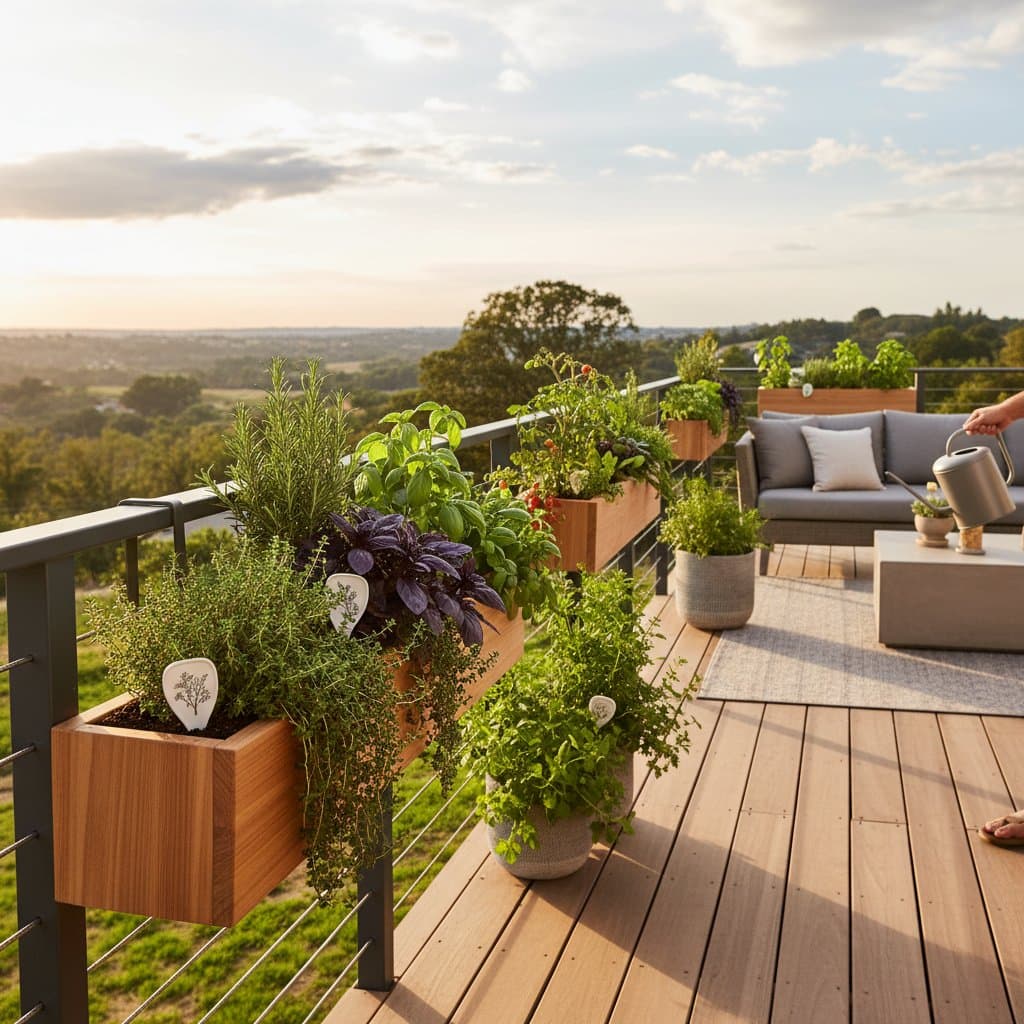
Transform Deck Railings into Productive Herb Gardens
Deck railings offer untapped potential beyond mere boundaries. They can support vibrant herb gardens that release aromatic scents, enhance culinary dishes, and add natural texture to otherwise plain surfaces. The objective remains straightforward: convert idle railing space into a functional, aesthetically pleasing green feature.
This approach fits compact decks, balconies, and urban terraces. It requires basic tools, a segment of railing, and limited time investment. Follow the instructions to design, install, and sustain railing herb gardens that flourish through the growing season.
Project Overview
A railing garden consists of planters or troughs secured to the upper or inner side of a deck railing. Such setups position herbs in optimal sunlight and convenient proximity to cooking areas. Varieties like basil, thyme, mint, and parsley excel in these confined vessels due to their affinity for rapid drainage and sun-warmed soil.
Key considerations include firm attachment and consistent hydration. An insecure or overburdened container risks instability or railing damage. Excessive dryness or saturation harms plants swiftly. The following process establishes equilibrium in these areas.
Essential Tools and Materials
Assemble these supplies in advance to streamline the assembly and avoid interruptions.
- Planters or troughs: Select three to six units, each measuring 18 to 24 inches in length
- Mounting brackets: Provide two per planter, compatible with your railing dimensions
- Potting mix: Prepare approximately one cubic foot per container
- Herb seedlings or seeds: Opt for four to six compatible types
- Hand trowel and small scoop
- Watering can or hose equipped with a soft spray attachment
- Protective gloves and eyewear
- Screws, wall anchors, and cordless drill for bracket installation
Inspect the railing thoroughly prior to attachment. Wooden elements must appear sturdy, free from splits or decay. Metal components should show no corrosion at joints.
Installation Steps
1. Measure and Design the Layout
Employ a tape measure to record railing width and available length. Maintain a minimum 6-inch clearance at corners to promote safety and circulation. Draft a simple diagram indicating planter positions. This visualization aids in distributing weight evenly and optimizing spacing.
2. Select Herbs Based on Sunlight Exposure
Railings in full sun support robust growers such as basil, oregano, and rosemary. Shaded areas favor mint, parsley, and chives. Incorporate at least one cascading variety, like thyme, to create a gentle, flowing border.
3. Install Brackets Securely
Adhere precisely to manufacturer guidelines for bracket placement. Secure screws firmly without compromising the railing material through over-tightening. Verify stability by applying downward pressure with both hands. Reinforce with additional hardware or straps if any movement occurs.
4. Prepare the Planters
Introduce potting mix to fill each container to three-quarters capacity. Incorporate a small amount of slow-release fertilizer if preferred. Reserve one inch of headspace at the rim to accommodate watering without spillage.
5. Plant and Initial Watering
Position herbs with 6 to 8 inches separating each. Firmly pack soil around root systems. Irrigate thoroughly until slight drainage appears. This initial application compacts the medium and eliminates voids.
6. Final Positioning and Cleanup
Affix planters to brackets, ensuring horizontal alignment. Prune extended foliage that might obstruct pathways. Retain a soft brush for removing displaced soil from the railing surface.
Essential Safety Guidelines
Wear gloves during drilling or bracket handling. Avoid leaning beyond the railing with tools or laden containers. Limit aggregate weight to 20 pounds per linear foot to safeguard the structure. Confirm that planters do not obstruct drainage outlets or deck gutters.
Common Issues and Solutions
Rapid Soil Drying: Apply a half-inch mulch layer or coconut coir atop the surface. This layer retains moisture effectively.
Yellowing Foliage: Investigate overwatering possibilities. These plants require efficient drainage. Adjust to irrigation every two days or upon sensing dryness one inch below the surface.
Unstable Planters: Re-secure brackets or relocate to firmer railing sections. For softened wood, substitute with extended stainless-steel fasteners.
Stunted Development: Reposition containers biweekly to distribute sunlight uniformly.
Cost and Time Estimates
Anticipate expenses ranging from $50 to $120, influenced by material choices. Plastic options prove economical and lightweight compared to metal alternatives. Durable stainless fittings incur higher costs yet endure outdoor conditions longer. Allocate two hours for installing three planters, followed by brief weekly attention for hydration and pruning.
Ongoing Care Practices
Administer light watering each morning in hot periods. Harvest tips regularly to stimulate fresh growth. Monthly, excise withered portions and replenish soil with new mix. As temperatures drop, gather remaining foliage, then relocate containers indoors or drain them to avert freeze-thaw damage.
Wipe brackets seasonally using mild soap solution. Re-tighten fasteners following intense weather events. Routine inspections like these mitigate wear and prolong the setup's viability.
Year-Round Considerations
In spring's onset, validate bracket integrity before new plantings. During peak season, invigorate soil via compost infusions or natural amendments. Toward autumn, gather herbs for preservation in airtight glass containers, marked clearly for effortless winter access.
In humid climates, increase planter separation by one inch to enhance ventilation. This precaution minimizes fungal issues and preserves railing dryness.
Extending Your Garden's Utility
Harvest herbs judiciously to sustain productivity. Experiment with companion planting, such as pairing basil with cherry tomatoes in adjacent pots for natural pest deterrence. Document growth patterns in a journal to refine selections for subsequent seasons. These strategies amplify the garden's contributions to your outdoor and culinary routines.