
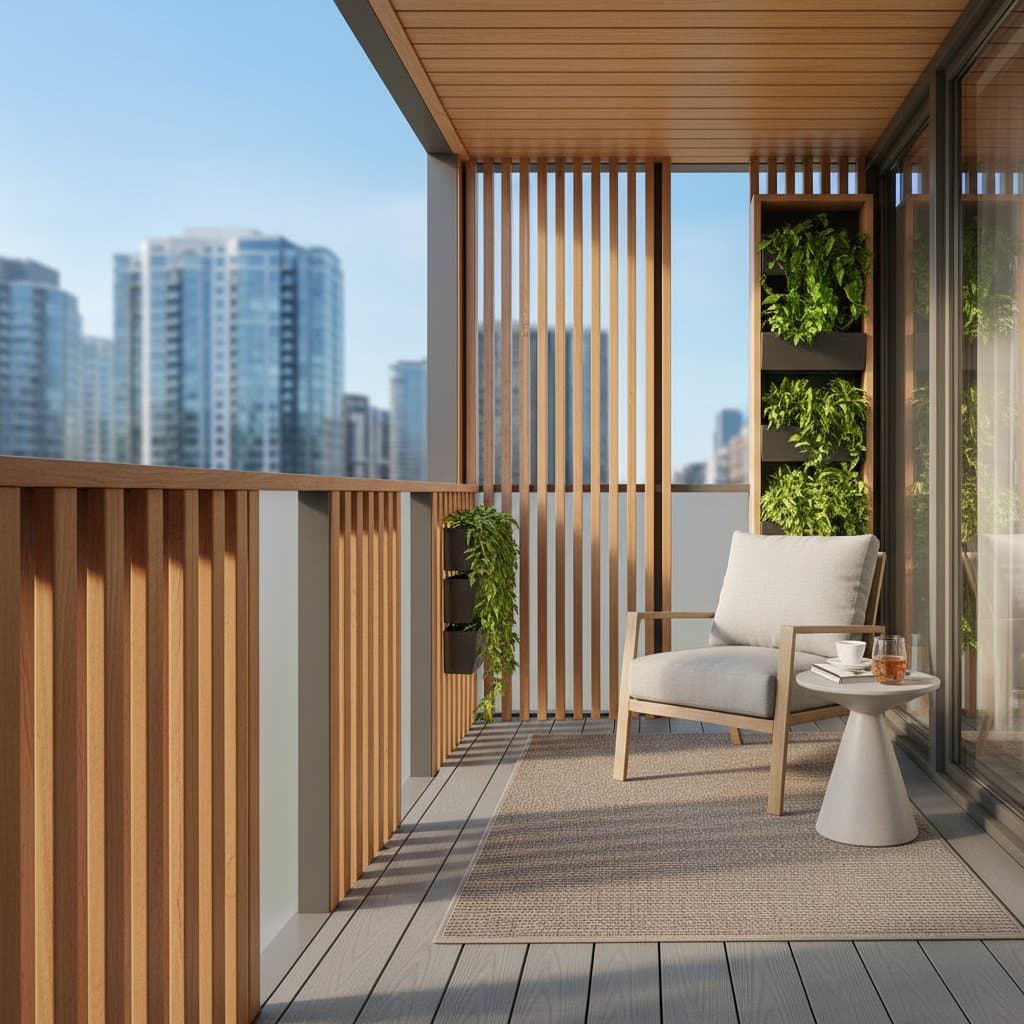
4. Add Finishing Touches
Secure the top edge of the structure with a slim strip of pressure-treated wood or anodized aluminum to shield it from precipitation. Apply a durable paint or powder coating to the exterior surfaces for added protection and aesthetic appeal. For seamless integration with surrounding elements, position climbing vines or woven bamboo screens directly in front of the panels, ensuring they enhance rather than obstruct the overall design.
Consider incorporating subtle lighting fixtures along the frame to illuminate the space during evening hours. These additions not only elevate the visual harmony but also extend usability into cooler months. Select materials that complement the balcony's existing palette, such as neutral tones or natural textures, to create a cohesive look.
5. Test and Adjust
Position yourself on the balcony during peak urban activity, such as rush hour traffic or nearby construction. Identify specific areas where ambient noise persists, paying close attention to corners or seams. If a particular section remains disruptive, install an additional panel or position a sturdy planter to seal the opening effectively.
Minor modifications often yield significant improvements in sound isolation. Use a smartphone application designed for decibel measurement to quantify changes before and after adjustments. This data-driven approach ensures the setup meets personal comfort standards and justifies further refinements if necessary.
Safety Considerations
Verify the balcony's weight-bearing capacity prior to installing substantial panels or planters. Standard urban balconies typically support an extra 10 to 15 pounds per square foot, equivalent to 49 to 73 kilograms per square meter, though building management confirmation is essential. Select lightweight yet robust materials to stay within these limits.
Ensure the installation does not impede access to emergency exits or violate minimum railing height regulations, which are often set at 42 inches in many jurisdictions. Opt for galvanized or stainless-steel fasteners to resist corrosion, thereby preventing unsightly stains and structural weaknesses over time. Route any electrical wiring for tools or ambient lighting well away from potential moisture sources to minimize hazard risks.
Incorporate non-slip bases for freestanding elements and secure all components against high winds, which are common in elevated urban spaces. Regular inspections help maintain these safety features intact.
Common Issues and Solutions
Issue: Panels vibrate during gusty conditions.
**Resolution: Secure all fasteners more firmly and insert rubber gaskets between the panels and supporting frame to dampen movement and eliminate rattling sounds.
Issue: Sound penetrates from the upper boundary.
**Resolution: Raise the wall height by 12 to 24 inches using lightweight acoustic foam inserts or a lattice framework draped with sound-absorbing fabric, ensuring it does not compromise stability.
Issue: Condensation accumulates in concealed areas.
**Resolution: Create discreet drainage openings at the bottom edge and apply fresh sealant around joints. Promote consistent ventilation to avert mold growth and preserve material integrity.
Issue: The space appears dimmer post-installation.
**Resolution: Choose pale hues for the panels, select semi-transparent acoustic options, or apply light-reflective coatings to adjacent walls and floors to redistribute natural illumination effectively.
Address these challenges promptly to sustain optimal performance and enjoyment.
Cost Estimates and Timeline
For a compact balcony measuring less than 50 square feet, anticipate the following expenses:
- Acoustic Panels: $200 to $400, varying with thickness and composition such as mass-loaded vinyl or cellular foam.
- Framing Materials and Fasteners: $80 to $150, including aluminum rails and mounting brackets.
- Sealants and Protective Coatings: $20 to $40 for weatherproof caulks and paints.
- Optional Planters and Greenery: $50 to $100 to incorporate natural sound buffers.
Two individuals can finish the entire project over a single weekend. Dedicate the first half-day to constructing and affixing the frame, followed by a full day for panel placement, sealing, and final touches. Engaging a professional adds $200 to $500 in labor costs, but guarantees adherence to waterproofing standards and local building codes.
Factor in tool rentals if necessary, such as a cordless drill or level, which may cost $20 to $50 for the duration. Long-term savings arise from reduced noise-related stress and increased property value through enhanced outdoor livability.
Upkeep Guidelines
Conduct thorough examinations of the acoustic walls every three to six months. Search for signs of loosened hardware, deteriorated seals, or weathered finishes. Respond by retightening connections, reapplying sealants, and refreshing paint layers as required.
Clean the surfaces using a solution of mild detergent and water applied with a soft-bristled brush. Refrain from high-pressure washing, as it may drive moisture into the core materials and cause internal damage. For fabric-wrapped panels, employ a low-suction vacuum to eliminate accumulated particles without abrading the covering.
Replace fabric elements every three to five years to restore peak absorption capabilities. Composite or metallic panels endure longer with minimal intervention, yet benefit from yearly wipedowns to remove urban pollutants like soot or pollen.
Professional Assistance Indicators
Seek the expertise of a licensed contractor or structural engineer under these circumstances:
- Evidence of balcony foundation issues, including fissures or persistent dampness.
- Requirements to mount panels exceeding 6 feet in height, demanding specialized anchoring.
- Integration with communal structures or utility lines, such as adjacent building walls or outdoor power sources.
Inquire about the specialist's familiarity with exterior soundproofing solutions and request examples from prior installations. Professionals often employ calibrated meters to assess decibel reductions pre- and post-project, providing verifiable results that validate the expenditure.
Seasonal Protection Strategies
In regions prone to severe weather or cold seasons, opt for detachable panels that store easily inside. Mark each component with its designated position to simplify reinstallation in spring. Organize small parts like screws and spacers in airtight containers to prevent loss or corrosion.
For permanent fixtures, drape heavy-duty, breathable tarps over the assembly during extended periods of disuse. This shielding extends durability against elements like freezing rain or intense sunlight. Annual disassembly for deep cleaning further prolongs service life.
Implementation Roadmap
Initiate the process modestly by targeting the most intrusive noise source with a segmented barrier. Employ a decibel-tracking mobile application to monitor reductions and refine based on real-world feedback.
Incorporate absorbent textiles like weather-resistant rugs and padded seating to capture residual echoes. Conclude by introducing potted foliage or vertical gardens, which not only muffle additional sounds but also infuse vitality into the refreshed sanctuary.