
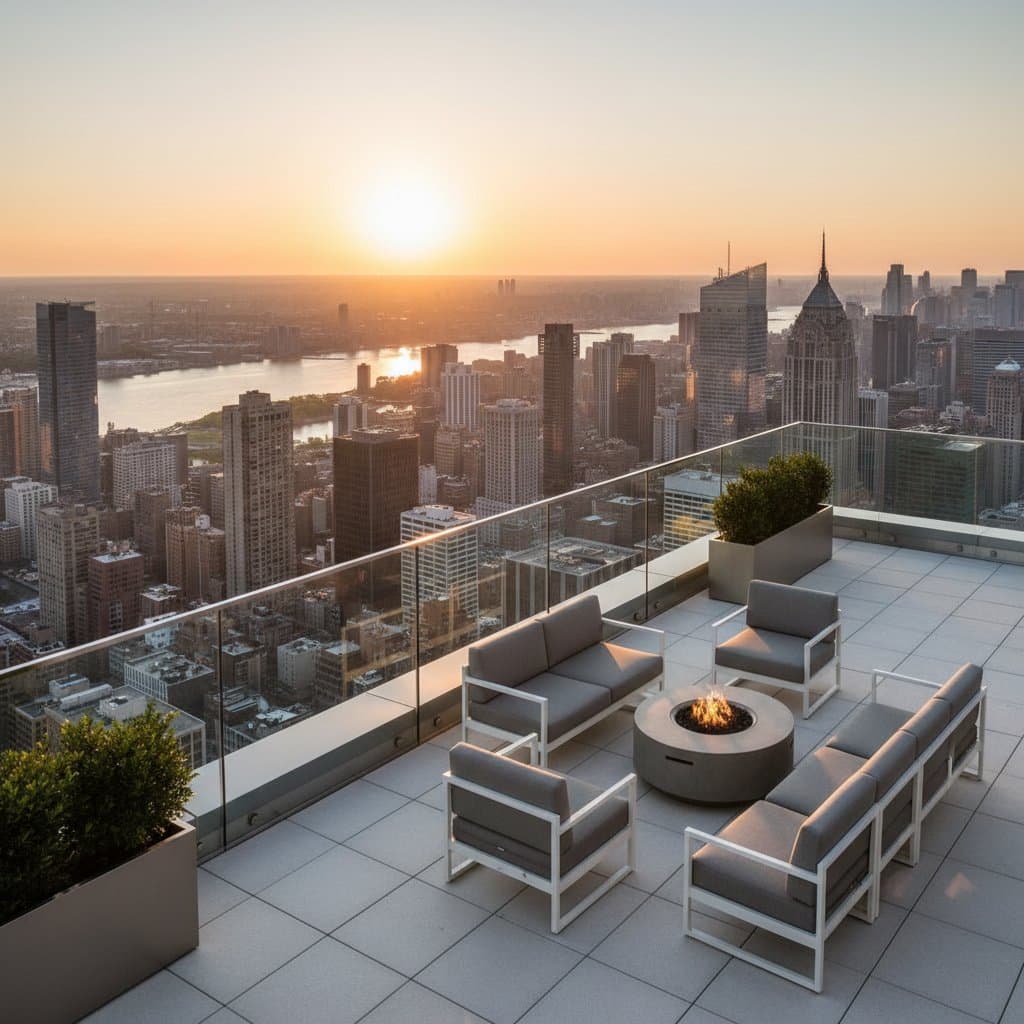
Why Frameless Railings Deliver Unobstructed Rooftop Views
City living offers unique rewards, such as expansive rooftop vistas of skylines, rivers, and shifting sunlight. These elements transform compact spaces into serene retreats. Traditional railings, however, often obstruct these sights with robust posts and dense frames. Frameless glass railings address this issue through transparent tempered glass panels that provide robust support without visible metal components. The viewer experiences the panorama directly, unobscured by structural elements.
The primary objective remains straightforward: establish a secure boundary that preserves the aesthetic without compromising visibility. Frameless glass railings achieve this equilibrium of protection, style, and seamless sightlines. The following sections detail their mechanics, preparation requirements, and strategies for sustained performance and visual appeal.
Overview
A frameless railing employs substantial tempered or laminated glass panels secured via concealed anchors at the base or sides. Vertical posts between panels are absent, allowing the glass to bear the structural demands. This configuration renders the railing virtually imperceptible from various perspectives.
The outcome yields a sleek perimeter that integrates seamlessly with surrounding airspace. Such designs suit contemporary rooftops, terraces, and balconies. Proper execution ensures compliance with safety regulations while maximizing panoramic enjoyment.
Tools and Materials
Precision defines the installation and upkeep of frameless glass railings. Assemble the necessary tools and materials prior to commencement.
Materials:
- Tempered glass panels, typically ½ inch (12 mm) thick
- Stainless steel base channels or point mounts
- Rubber gaskets or spacers
- Silicone sealant suitable for exterior applications
- End caps or top rails, as mandated by local codes
Tools:
- Level and measuring tape
- Drill equipped with masonry bits
- Torque wrench
- Glass suction cups
- Safety gloves and protective eyewear
Confirm that all elements align with regional building codes regarding height, load capacity, and panel spacing.
Steps
Step 1: Measure and Plan
Outline the railing path along the rooftop perimeter. Verify measurements twice to determine overall length, then divide by individual panel widths. Incorporate a ¼ inch (6 mm) expansion gap between panels. Identify positions for channels or point mounts.
Step 2: Prepare the Base
Clear the surface thoroughly and assess its levelness. Address any irregularities exceeding ⅛ inch (3 mm), as they influence glass alignment. Employ fillers or grinding tools as required. Utilize a chalk line to maintain channel straightness.
Step 3: Install the Channel or Mounts
Fasten the base channel using stainless steel anchors. Apply torque according to manufacturer specifications. For point mounts, designate hole locations and drill to precise depths. Don safety gloves and eyewear throughout the drilling process.
Step 4: Place the Glass Panels
Employ suction cups to maneuver each panel into the channel. Position rubber spacers to avert metal-to-glass contact. Ensure top edges align within ⅛ inch (3 mm).
Step 5: Seal and Finish
Distribute silicone sealant along joints to repel moisture. Remove surplus material prior to curing. Incorporate top rails or caps if code demands. Reexamine all connections and retighten following a 24-hour period.
Safety Tips
Although glass edges possess durability, impacts from tools or debris may cause chipping. Manipulate panels using gloves and support from the sides. Prevent corner strikes against rigid surfaces. Maintain protective wrapping on panels until installation.
For work exceeding 6 feet (approximately 2 meters) in height, attach a safety harness. Minor missteps at elevation pose significant risks. Refrain from glass placement during high winds or precipitation, as these conditions impair sealant bonding and surface stability.
Troubleshooting
Panel not level: Adjust by slightly loosening channel clamps, inserting a thin shim beneath the lower edge, and retightening.
Condensation at the base: Inspect silicone joints for voids and reapply sealant. Verify that channel drainage holes remain unobstructed.
Loose fittings: Employ a torque wrench to secure to recommended levels. Replace any rusted hardware with marine-grade stainless steel equivalents.
Budget and Time
Expect costs for a frameless glass railing to range from $180 to $320 per linear foot, influenced by glass thickness, mounting style, and surface finish. Professional labor incurs additional expenses. A do-it-yourself project spanning 20 feet typically requires one full weekend with two participants.
Opt for straight panels over curved variants to reduce expenditures. Prioritize superior glass and hardware quality, as these elements directly impact safety and durability.
Maintenance
Frameless railings demand minimal attention, yet consistent cleaning preserves transparency.
Monthly:
- Rinse panels using mild soap and water.
- Dry with a microfiber cloth to eliminate water spots.
Twice a year:
- Examine fittings for secure attachment.
- Review sealant integrity and reapply if fissures appear.
- Clear channel drains to avoid water accumulation.
Steer clear of abrasive tools or ammonia-based cleaners, which may etch glass or tarnish stainless steel.
Seasonal Reminders
Temperature fluctuations in colder months strain hardware via expansion and contraction. During winter, remove snow gently with a soft broom rather than a shovel. In warmer seasons, wash off pollen and dust promptly to prevent adhesion.
For sun-exposed rooftops, administer a UV-protective polish annually. This treatment mitigates fine scratches and sustains glass clarity.
Smart Design Moves
Integrate frameless railings harmoniously with rooftop configurations. Position furniture at least 3 inches from panels to minimize collision risks. In privacy areas, select frosted or tinted glass for select sections while preserving primary clear views.
Incorporate LED lighting within base channels to illuminate evenings. These fixtures accentuate glass borders and enhance nocturnal safety without excessive brightness.
Position low-profile containers of herbs or succulents adjacent to the railing. Such plantings temper the glass's starkness while upholding openness.
When to Call a Pro
Engage a certified installer for uneven rooftop surfaces, railings longer than 25 feet, or scenarios requiring engineered certification per local codes. Request documentation of tempered or laminated glass safety features, load testing data, and warranty terms.
Establishing Your Clear Horizon
Survey your rooftop and envision the railing's placement. Record the perimeter length, observe any inclines, and select between base channels or point mounts.
Post-installation, affix a concise maintenance log near the entry point. Perform monthly cleanings, biannual inspections, and relish the unobstructed vistas each day. Frameless railings elevate rooftop edges into seamless extensions of the skyline.