
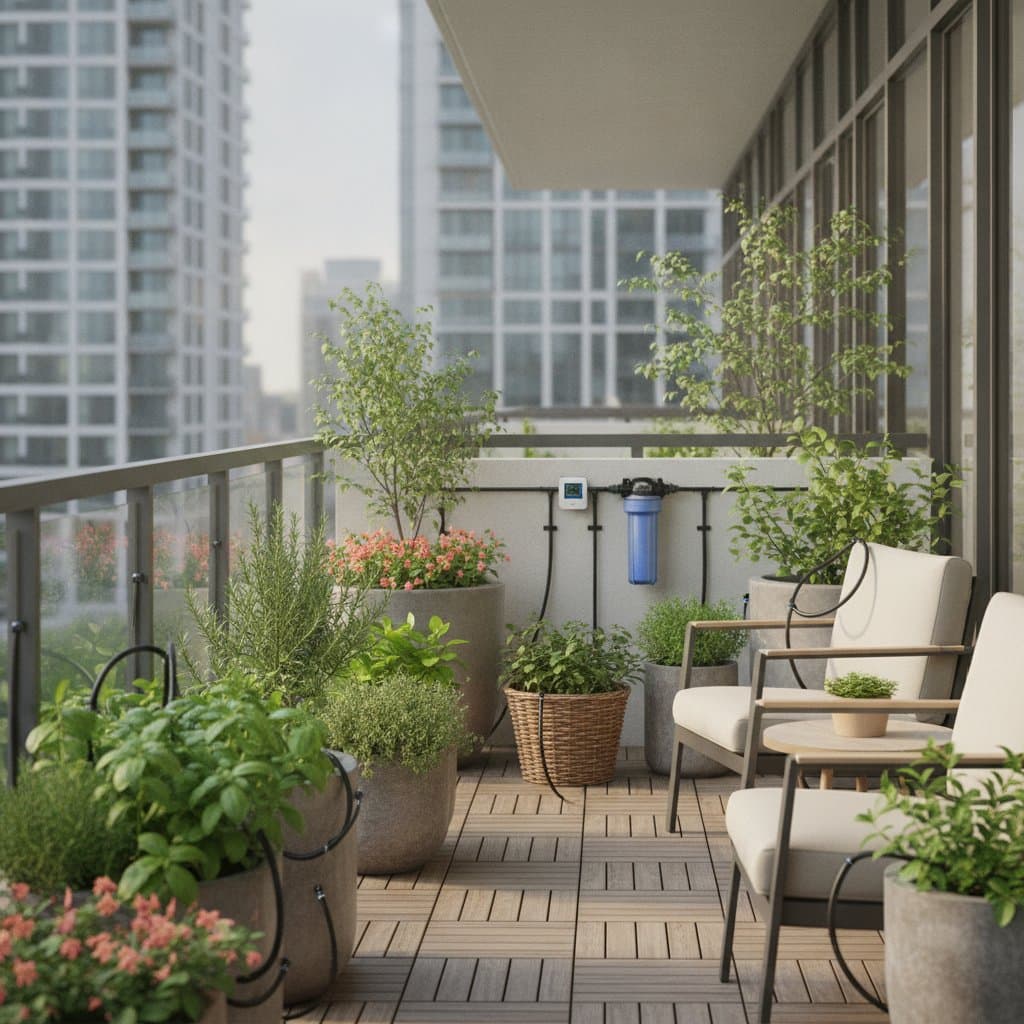
The Micro-Drip Trick for Thriving Balcony Gardens
Your balcony plants wilt fast when the weather swings between hot sun and dry wind. You water them, but it never feels like enough. A micro-drip irrigation system can change that. It gives each plant a steady sip right at the roots, saving water and time. The goal is simple. Keep your balcony garden thriving with less stress and waste.
This guide explains what a micro-drip system is, why it matters for small spaces, and how to set it up safely and affordably. You will learn the tools, steps, and care tricks that help your balcony stay green all season.
Overview
A micro-drip system uses thin tubing, connectors, and drip emitters to deliver water slowly and directly to plant roots. Instead of flooding the pot, it gives a controlled flow measured in gallons per hour. Most balcony setups use 0.5 to 2 gallons per hour emitters, which match the size of container plants.
The benefit is precision. Water goes where plants need it, not onto the floor or rail. It keeps soil moisture steady, reduces evaporation, and limits fungal growth from wet leaves. You can connect the system to a timer or smart controller so your plants never miss a watering, even when you are away.
A micro-drip setup fits balconies as small as 3 by 6 feet, and it scales easily. Once installed, you only adjust flow rates or move emitters as your garden grows.
Tools and Materials
You can find complete kits online or at garden centers. For a small balcony, one kit usually covers up to 20 pots. Gather the following items.
- Main supply tubing: 1/4 inch diameter, about 25 feet
- Drip emitters: 0.5 to 2 GPH, one per pot for small plants, two for large containers
- Connectors and tees: to branch the tubing around corners
- End plugs: to close the line ends
- Micro stakes or clips: to secure tubing at each pot
- Hose adapter: connects to your faucet or balcony spigot
- Optional timer: battery or solar powered
- Scissors and a small bucket: for cutting and soaking tubing
If you do not have a faucet on your balcony, you can use a gravity-fed reservoir elevated about 3 feet above your plants.
Steps
Step 1: Plan Your Layout
Sketch your balcony. Mark pot positions, the water source, and a clean path for tubing. Keep lines short and direct to prevent pressure loss. Group plants with similar water needs, such as herbs together and succulents in another section.
Step 2: Soften and Cut Tubing
Soak the tubing ends in warm water for one minute to make them flexible. Cut pieces to length with scissors. Leave an extra 2 inches of slack for easy adjustment later.
Step 3: Connect the Main Line
Attach the main tubing to the faucet adapter or reservoir outlet. Run it along the back edge of your railing or wall. Secure it with clips every 12 inches to keep it tidy and safe from wind.
Step 4: Add Branch Lines
Use tees or connectors to split the main line toward each plant cluster. Push them firmly until you hear a small click. Run smaller pieces of tubing from each branch to the pots.
Step 5: Install Emitters
Insert emitters at the end of each branch line. Place the emitter 1 inch from the base of the plant. For large pots or thirsty plants, add a second emitter on the opposite side.
Step 6: Cap the Ends and Test
Plug open tube ends with end caps. Turn on the water slowly. Check for leaks or uneven flow. Tighten or re-seat fittings until every emitter drips evenly.
Step 7: Set the Timer
If using a timer, set it to run early in the morning for 5 to 15 minutes, depending on plant size and weather. Observe soil moisture after a few days and adjust duration until the top inch stays damp but not soggy.
Step 8: Secure and Hide Lines
Once you confirm flow, tuck tubing behind planters or under railings. Use cable clips or Velcro ties to keep it neat. Good organization prevents tripping hazards and UV damage to tubing.
Safety Tips
Check balcony weight limits before adding water reservoirs or heavy planters. Avoid electrical contact if you use a smart timer. Keep all plugs and cords dry and off the floor. Do not pierce tubing with sharp tools. Use a drip punch or the pre-made holes in kits. Flush the system once a month to prevent clogging from dust or algae.
Troubleshooting
Uneven Flow
If one emitter drips too fast or too slow, check for kinks or blockages. Soak clogged emitters in vinegar for 15 minutes to dissolve mineral buildup.
Leaks at Fittings
Leaks often mean loose or cracked connectors. Cut off the damaged part and reattach a fresh piece. Warm tubing before pushing it on for a tighter seal.
Weak Pressure
A gravity-fed system may lose pressure if the reservoir is too low. Raise it at least 3 feet above the highest pot. For larger setups, consider a small submersible pump.
Water Pooling
If soil stays soggy, reduce watering time or switch to lower-flow emitters. Check that drainage holes are open.
Maintenance
Keep your system healthy with simple habits. Inspect weekly for leaks, clogs, or loose tubing. Flush monthly by removing end plugs and running clean water for two minutes. Replace emitters yearly to maintain consistent flow. Clean filters on faucet adapters or pumps as needed. Check soil with your finger. If the top inch feels dry, adjust timer duration slightly. A well-kept micro-drip line can last for several seasons without replacement.
Storage
If you pack up your garden for winter or travel, take a few steps to protect your system. Drain all tubing and let it dry. Coil lines neatly and store them in a sealed bin away from sunlight. Keep emitters and fittings in labeled bags. If using a timer, remove batteries and store them separately in a dry place. These precautions prevent cracking and corrosion so you can reinstall the system easily next season.
Budget and Time
A small balcony kit costs between 25 and 60 dollars, depending on size and brand. Timers add another 20 to 50 dollars for manual or smart options. Installation usually takes one to two hours the first time. Water use drops by up to 50 percent compared to hand watering because less moisture evaporates. Over time, this saves both water and plant replacements.
Seasonal Reminders
Hot Weather
Increase watering duration slightly during heat waves. Check emitters for salt buildup caused by faster evaporation. Shade reservoirs with fabric to keep water cooler.
Cool Weather
Shorten watering time to prevent soggy soil. Lift pots slightly on blocks to improve drainage and air flow.
Rainy Periods
Turn off the timer if natural rain keeps the soil moist for several days. Some smart controllers can do this automatically using a moisture sensor.
Windy Days
Wind dries soil faster. Add mulch or small pebbles around pot surfaces to retain moisture and reduce splashing.
When to Call a Pro
Most balcony systems are easy for DIY setup, but call a plumber or irrigation specialist if you need to connect to a complex building water line. You plan to automate with Wi-Fi or smart home integration. You notice persistent leaks inside walls or near electrical outlets. Ask the pro to check pressure limits, backflow preventers, and safe mounting options. A short consultation can prevent water damage or code issues.
Getting Started
Setting up a micro-drip system gives you freedom from daily watering and helps plants stay consistently healthy. Start small by testing one section or a few pots first. Track results by noting how long the soil stays moist and adjust flow accordingly. Expand gradually by adding more emitters or a timer once you trust the system. The payoff is steady growth, fewer wilted leaves, and less guilt when you forget to water. You will enjoy your balcony more because it takes care of itself.
Pro Tips for Success
Use a pressure regulator if your faucet has high pressure. It keeps emitters from popping off. Choose black tubing to block sunlight and reduce algae. Mix plant types wisely by pairing those with similar moisture needs on one line. Label lines if you run separate circuits for herbs, flowers, or vegetables. Add a fertilizer injector for low-dose feeding through the drip system. Each small upgrade makes your balcony garden smarter and more responsive to daily changes.
Common Mistakes to Avoid
Overwatering succulents. They need less frequent drips, about once a week. Ignoring leaks. Even tiny drips waste water and stain balcony floors. Skipping flushes. Small particles can clog emitters fast in city air. Running tubing in direct sun. It shortens life and softens plastic. Forgetting the timer reset. When seasons shift, adjust schedules to avoid stress on roots. Awareness of these pitfalls keeps your system running smoothly and your plants vibrant.