
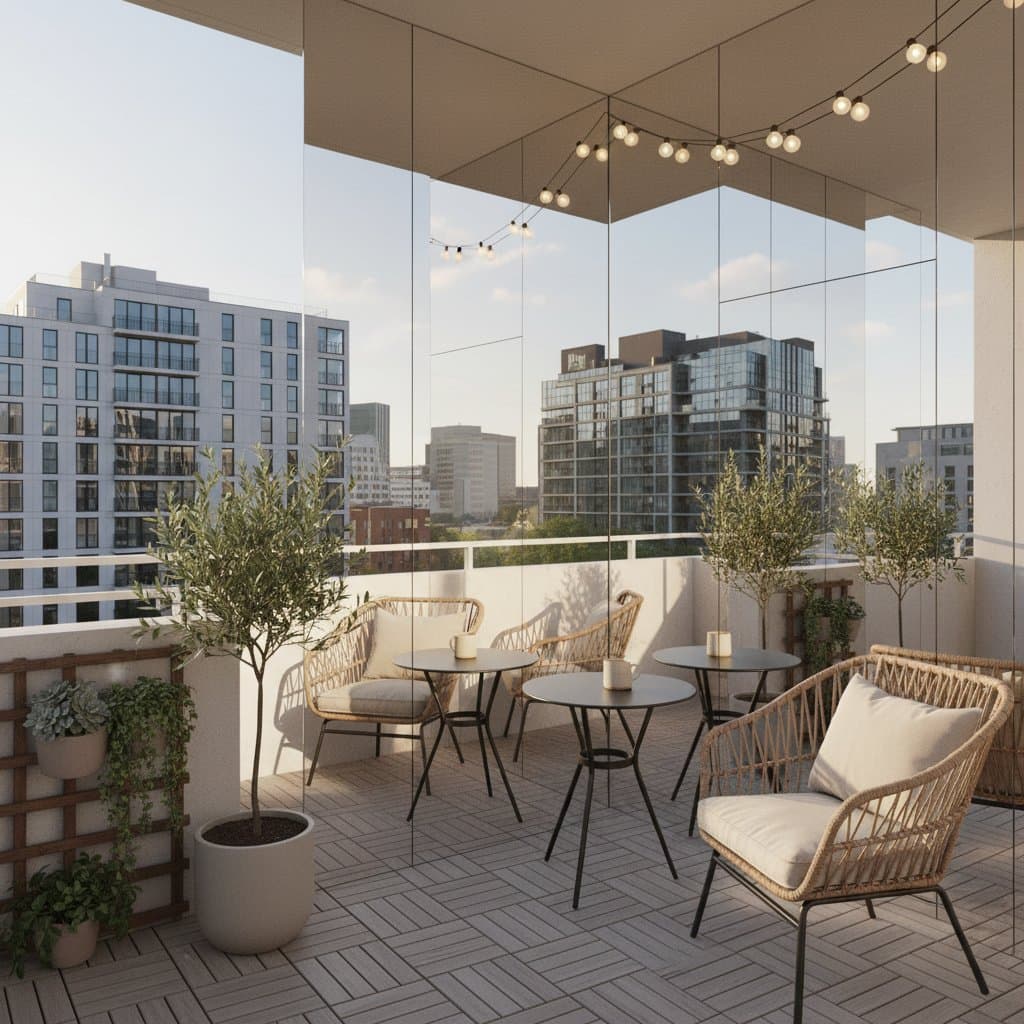
Mirror Walls That Expand Small Balcony Spaces
Small balconies often constrain furniture placement and limit enjoyment due to their confined dimensions. Strategic use of mirror walls addresses this challenge by reflecting surrounding elements, thereby creating an illusion of greater depth and openness. These reflective surfaces capture light and views, transforming a modest area into a more inviting extension of living space.
The principle relies on optical deception, similar to how interior mirrors enlarge rooms. On balconies, mirrors amplify natural light from the sky or nearby greenery, reducing shadows and fostering a brighter atmosphere. Homeowners achieve this enhancement through careful selection and positioning of durable, weatherproof materials.
Understanding Mirror Wall Principles
Mirror walls function by duplicating visual elements, effectively doubling the perceived square footage. Position a large panel to reflect open vistas, such as distant horizons or lush foliage, rather than urban clutter or blank walls. This approach not only widens sightlines but also integrates the balcony seamlessly with broader surroundings.
Reflective installations benefit indoor areas as well. Sunlight striking the mirror redirects into adjacent rooms, illuminating interiors naturally and minimizing reliance on artificial lighting. Select mirrors with subtle framing to maintain a clean, modern aesthetic that complements various balcony styles, from minimalist to botanical.
For optimal results, consider the balcony's orientation. South-facing spaces receive abundant light, making mirrors particularly effective for scattering rays evenly. In shaded urban settings, mirrors still prove valuable by borrowing brightness from reflective city elements like glass buildings.
Essential Tools and Materials
Gather these items before beginning the project to ensure a smooth process:
- Weather-resistant mirrors or acrylic panels, sized to fit the wall without overwhelming the space (common dimensions include 24 by 36 inches for standard balconies)
- Heavy-duty mounting hooks or anchors designed for outdoor exposure, such as stainless steel varieties to resist corrosion
- Precision level, measuring tape, and pencil for accurate placement
- Clear outdoor sealant to protect edges from moisture and temperature fluctuations
- Microfiber cloth paired with a pH-neutral cleaner for post-installation polishing
- Safety gear, including protective gloves and eyewear, to handle materials securely
Budget for removable options if leasing property, such as adhesive hooks that adhere without damaging surfaces. Allocate two to three hours for the entire setup, depending on balcony access and mirror size.
Step-by-Step Installation Guide
Follow these structured steps to install mirror walls effectively and safely.
-
Assess and measure the installation area. Determine the wall's dimensions and mark a central position, maintaining at least two inches from edges or railings. This centering prevents the mirror from appearing cramped and promotes visual balance.
-
Evaluate reflection potential. Position yourself in primary seating areas to preview the mirrored view. Prioritize reflections of sky, trees, or water features, which contribute to a serene, expansive feel. Avoid directing the mirror toward unattractive elements like air conditioning units.
-
Outline mounting locations. Employ the level and pencil to draw faint lines for hook placement. Ensure horizontality to avoid distortions that could emphasize the balcony's small scale rather than expand it.
-
Prepare the surface with anchors. For masonry walls, drill shallow pilot holes using a masonry bit, then insert anchors. Secure them firmly, testing stability by applying gentle pressure.
-
Apply protective sealant. Run a narrow line of sealant along the mirror's perimeter to shield against rain and humidity, which might otherwise cause delamination or fogging.
-
Mount the mirror securely. Lift the panel with assistance if it exceeds 15 pounds, aligning it with marked points. Double-check levelness before finalizing attachments.
-
Polish and fine-tune. Wipe away residue with the cloth, then experiment with slight angles to optimize the reflection. A 5- to 10-degree tilt often enhances depth without causing disorientation.
Key Safety Considerations
Safety remains paramount when installing outdoor mirrors, given exposure to wind, weather, and varying heights.
- Choose hardware capable of supporting at least double the mirror's weight to withstand gusts or vibrations.
- Position mirrors to avoid redirecting intense sunlight into eyes or interiors, which could create hazards during peak hours.
- Opt for shatter-resistant acrylic over glass, especially on elevated balconies where falls pose risks. Secure all edges to prevent slippage.
Regular inspections help maintain integrity. Check for loose fittings after storms and reinforce as needed.
Integrating Mirrors with Storage and Decor
Maximize limited space by combining mirrors with functional elements. For instance, attach small mirror tiles in a vertical arrangement along a narrow wall; three 12-inch squares create a ladder-like effect that draws the gaze upward, elongating the area.
Incorporate storage by mounting shelves below the mirror, reflecting their contents to suggest abundance. Behind hanging planters, a mirror doubles the foliage display, simulating a verdant wall garden. Store unused tiles or accessories in weatherproof bins indoors to protect from elements.
Experiment with groupings: A trio of varied-size mirrors forms an asymmetrical gallery that adds personality while multiplying light. This technique suits eclectic designs, blending utility with artistic flair.
Ongoing Maintenance Practices
Preserve the mirror's clarity and longevity through routine care.
Wipe surfaces monthly using mild soap diluted in water and a soft cloth to remove dust and pollen buildup. Steer clear of abrasive cleaners that erode sealant or scratch acrylic.
Conduct seasonal reviews of mounting hardware for signs of rust or wear, particularly in humid or coastal environments. Promptly replace any compromised components to ensure stability.
In regions with harsh winters, dismount mirrors before frost sets in, as trapped moisture can expand and crack materials. Store them in a dry indoor location until spring.
Cost Breakdown and Timeline
This upgrade proves accessible, with total costs ranging from $50 to $150 based on material choices. Acrylic panels offer affordability at $20 to $40 per unit but require gentle handling to avoid scratches. Framed glass alternatives, sealed properly, endure longer and cost $60 to $100.
A solo installer completes the task in approximately three hours, including preparation and testing. Larger setups or multiple panels may extend to four hours, but the investment yields daily enjoyment.
Implementing Your Mirror Wall Vision
Start with a simple action: measure your balcony's wall today or source suitable materials online. Upon installation, observe how the reflections extend boundaries, infusing the space with light and vitality. Consistent upkeep ensures this enhancement endures, turning a petite balcony into a cherished, spacious haven year-round.