
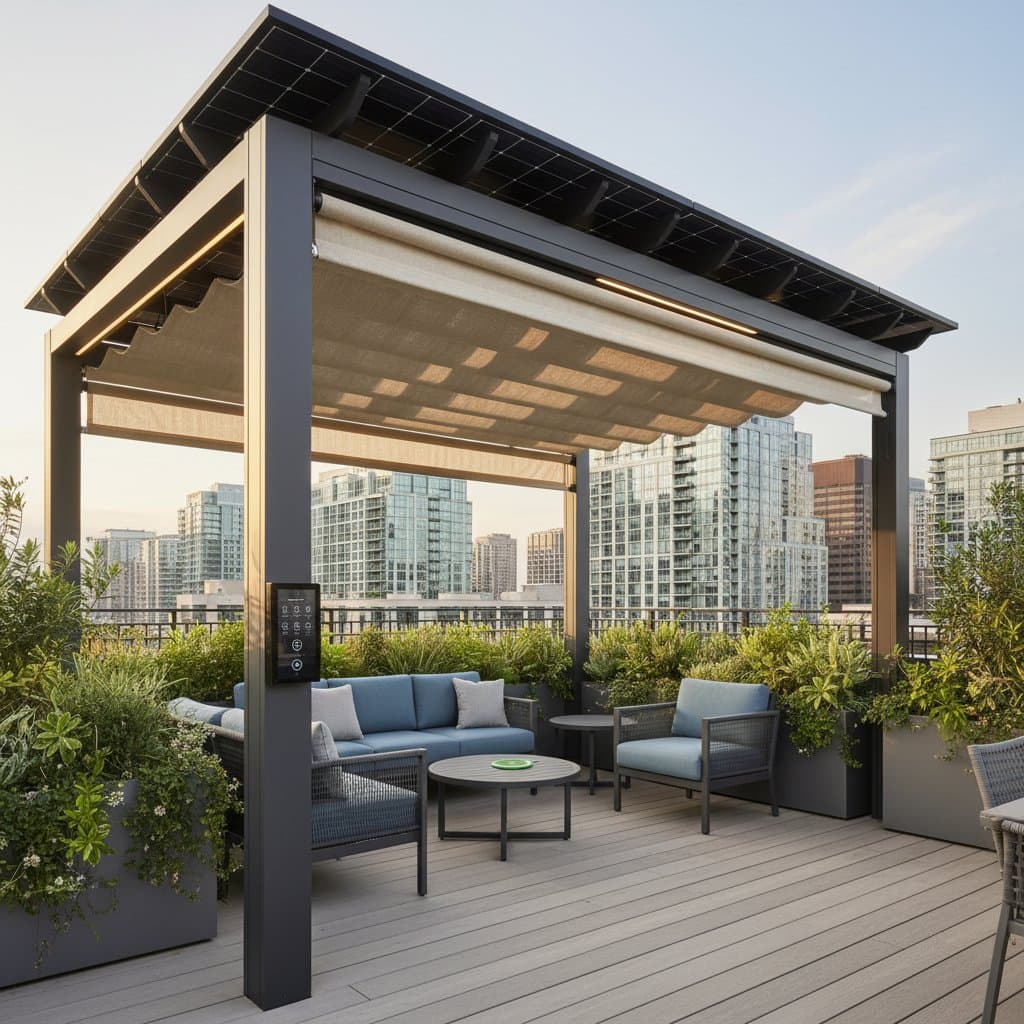
Enhance Compact Urban Decks with Smart Solar Shade Pergolas
Urban dwellers often cherish small decks as valuable outdoor spaces, yet these areas frequently suffer from excessive sun exposure and a lack of privacy. A smart solar shade pergola addresses these challenges by providing adjustable shade, integrated solar power, and automated controls. This addition allows residents to extend their time outdoors while reducing energy consumption and incorporating modern design elements that blend seamlessly with city living.
This comprehensive guide details the process of planning, installing, and maintaining a smart solar pergola on a compact deck. Readers gain insights into essential tools, design considerations for optimal light and ventilation, and key features that justify the investment. By following these steps, individuals transform limited spaces into functional, sustainable retreats.
Essential Tools and Materials
Assembling or retrofitting a solar shade pergola requires a mix of standard tools and purpose-built components. Before proceeding, evaluate the deck's structural integrity to ensure it supports the added weight.
Basic Tools
- Measuring tape, extending at least 25 feet (7.6 meters), to accurately assess dimensions and alignment.
- Cordless drill equipped with various bits for secure fastening and precise hole creation.
- 4-foot (1.2-meter) level to maintain even surfaces and prevent instability.
- 6-foot (1.8-meter) ladder for safe access to elevated areas during construction.
- Safety gear including gloves, safety glasses, and a dust mask to protect against hazards.
Required Materials
- Pergola frame kit constructed from durable wood or lightweight aluminum for weather resistance.
- Sturdy mounting brackets paired with lag screws to anchor the structure firmly.
- Retractable solar shade system or adjustable solar slats that generate energy while providing coverage.
- Smart controller hub and motorized unit for remote operation and automation.
- Weatherproof wiring and connectors to safeguard electrical components from moisture.
- Integrated solar panels or energy-harvesting fabric to power the system independently.
- Optional LED strip lighting to enhance ambiance during evening use.
- Sealant, paint, or stain to protect and customize the frame's finish.
Plan for 20 to 30 screws per side, along with at least four heavy-duty anchors, to achieve maximum stability. Selecting high-quality materials ensures longevity and minimizes future repairs.
Key Safety Considerations
Safety forms the foundation of any deck project, particularly when integrating electrical and structural elements. Adhering to these guidelines prevents accidents and preserves the deck's condition.
- Verify the deck's weight capacity, as a solar pergola may introduce 100 to 200 pounds (45 to 90 kilograms) of additional load. Consult a professional if uncertainties arise.
- Employ electrical covers and components specifically rated for outdoor environments to avoid shocks or short circuits.
- Disconnect power sources prior to linking solar lines to batteries or controllers, reducing the risk of electrical mishaps.
- Position ladders on firm, level ground when installing overhead beams, and have a spotter assist if needed.
- Schedule work during dry weather to prevent slips and ensure secure connections in wiring and drilling tasks.
Implementing these measures not only safeguards participants but also upholds the project's overall integrity.
Cost Breakdown and Timeline
Investing in a compact solar pergola typically ranges from $1,200 to $3,000, influenced by material choices and the extent of smart features. Professional labor increases expenses, while a do-it-yourself approach can reduce costs by approximately 40 percent.
Expense Categories
- Frame materials: $400 to $800, covering options like treated wood or powder-coated aluminum.
- Solar shade kit: $500 to $1,500, including retractable fabrics or slats with built-in photovoltaic cells.
- Smart controller and motor: $200 to $400, enabling app-based adjustments and scheduling.
- Lighting and accessories: $100 to $300, such as integrated LEDs or sensor upgrades.
Allocate 8 to 12 hours for a solo builder, or condense the effort into a single weekend with two participants. Factor in time for preparation, such as gathering supplies, and post-installation cleanup to streamline the process.
Optimizing Storage in Limited Spaces
Efficient organization maximizes the usability of a small deck and supports the pergola's performance. Thoughtful storage solutions keep controls accessible and maintain clear pathways.
- House remote controls and chargers within a sealed, waterproof container to shield them from rain.
- Install a compact deck box beneath seating for stowing tools, cleaning supplies, or seasonal items.
- Attach hooks to pergola posts for suspending lanterns, lightweight planters, or accessories without cluttering the floor.
- Position a short-handled broom in an easily reachable spot to routinely clear debris like leaves or pollen.
Such arrangements promote better airflow around the structure, keep sensors unobstructed, and create an illusion of expanded space. Regular tidiness also simplifies maintenance routines.
Maintenance Across Seasons
Smart solar pergolas deliver reliable performance throughout the year with minimal upkeep. Establish seasonal routines to preserve efficiency and prevent wear.
Spring Preparation
Clean solar panels thoroughly once pollen levels subside to restore energy output. Operate the shade mechanisms fully to confirm smooth retraction after winter inactivity.
Summer Adjustments
Fine-tune sensors to handle intense sunlight, preventing overheating. Opt for partial shade settings during peak heat to balance cooling and natural light.
Fall Inspections
Remove accumulated leaves weekly to avoid blockages in guide tracks. Examine all joints and bolts for signs of loosening, tightening as necessary.
Winter Protection
Secure shades in a fully open or closed position to resist freezing temperatures. Gently remove snow buildup with a soft brush to avoid surface damage.
These brief tasks, often requiring just a few minutes, significantly prolong the system's durability and effectiveness.
Implementing Your Pergola Project
A smart solar shade pergola elevates compact decks by combining shade, aesthetic appeal, and renewable energy generation. Individuals require no expansive area to achieve a comfortable outdoor haven. Focus on a solid foundation, thoughtful design, and user-friendly controls to realize these benefits.
Actionable Starting Points
- Measure the deck precisely and draft a layout that accommodates furniture, pathways, and shade coverage.
- Select an entry-level retractable solar kit, allowing for future enhancements like automated lighting or advanced sensors.
- Plan the installation for a clear, dry weekend, assembling all tools and materials in advance.
Upon completion, users often discover increased outdoor enjoyment. The shading reduces ambient temperatures, solar elements produce silent power, and intelligent features manage operations effortlessly. This integration fosters both relaxation and environmental responsibility, redefining small decks as versatile, all-season extensions of the home.