
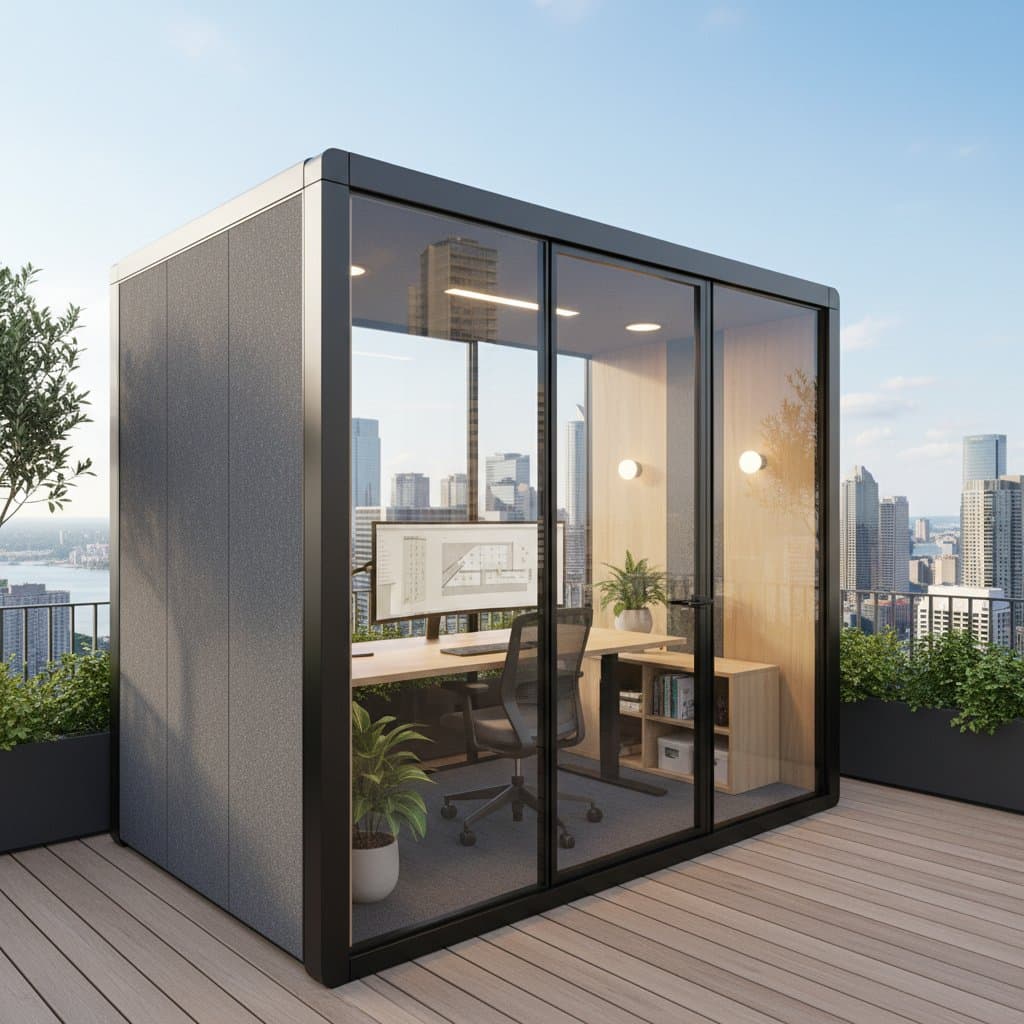
Transform Your Balcony into a Soundproof Private Office with Pods
Urban environments present challenges with confined areas and persistent noise. Consider the appeal of repurposing a balcony as a compact office, only to face disruptions from vehicular traffic, emergency signals, and adjacent residents. A soundproof pod addresses these issues effectively. This enclosed unit delivers seclusion, acoustic control, and organizational benefits without requiring extensive renovations. Proper configuration allows the balcony to evolve from a simple relaxation zone into a focused workspace that maintains access to daylight and breezes.
Understanding Soundproof Pods
A soundproof pod constitutes a compact, insulated enclosure engineered to minimize external sounds. These units function as freestanding or adaptable modules, frequently incorporating integrated illumination, air circulation systems, and electrical outlets. The primary objective involves establishing a regulated auditory environment suitable for professional tasks, academic pursuits, or confidential discussions. Positioned on a balcony, the pod additionally shields occupants from gusts, climatic variations, and metropolitan disturbances that impede attentiveness.
Essential Tools and Materials
Assemble necessary items prior to commencing the project.
Core components:
- Prefabricated soundproof pod assembly or customizable panel system
- Vibration-dampening rubber mats or acoustic underlayment
- Weather-resistant extension cord with ground fault protection
- Space-efficient desk and adjustable ergonomic seating
- Dimmable LED lighting fixture for focused illumination
Enhancement options:
- Low-decibel exhaust fan, ideally below 40 decibels
- Tinted window film to regulate temperature and enhance seclusion
- Acoustic rug suitable for indoor-outdoor applications to reduce internal echoes
Installation Process
-
Assess dimensions. Verify availability of minimum 3-by-4-foot unobstructed area for a solo occupant pod. Allocate an additional 6 inches perimeter for ventilation and secure access.
-
Evaluate structural capacity. Consult building specifications for balcony weight tolerances. Assembled pods typically range from 200 to 400 pounds; obtain approval prior to proceeding.
-
Condition the foundation. Clean thoroughly and inspect for fissures or irregularities. Position rubber mats or base pads to stabilize and absorb potential resonances.
-
Construct the enclosure. Adhere to the supplier's sequential panel guidelines. Fasten components securely. For units with transparent panels, employ protective gloves and moderate torque on fasteners to avert fractures.
-
Fortify seals. Apply adhesive weatherproof strips or specialized acoustic barriers along entryways and base connections. These measures enhance auditory barriers and prevent particulate ingress.
-
Configure electrical supply. Route the protected cord parallel to structural elements. Eliminate potential obstacles. Elevate plugs above ground level to mitigate moisture risks.
-
Integrate functional furnishings. Select minimalist pieces that preserve mobility. Opt for a compact work surface, supportive seating with back alignment features, and a versatile attachment light.
Prioritizing Safety
Maintain unobstructed airflow pathways continuously. Refrain from fully enclosing the space absent adequate circulation. Prohibit employment of heating elements or power-intensive appliances within. Verify that any embedded electrical systems carry UL certification and proper grounding. Position a functional smoke alarm in proximity for enclosed configurations.
Resolving Common Issues
Persistent auditory penetration may stem from minor fissures adjacent to frames or seams. A single-inch breach suffices to compromise isolation; supplement with targeted acoustic compounds. Excessive moisture buildup warrants addition of a compact, USB-operated circulator. Internal reverberations benefit from affixed textile coverings or area rugs on surfaces.
Cost Considerations and Timeline
Anticipate expenditures from $1,000 to $3,000, influenced by dimensions and attenuation efficacy. Factory-assembled models facilitate rapid deployment, often completing in fewer than four hours with dual participants. Custom fabrications may halve expenses through material sourcing, though they demand meticulous joint treatments.
Ongoing Upkeep
Conduct surface cleaning weekly using a moistened fabric. Inspect perimeter seals quarterly for degradation. Renew deteriorated stripping promptly. Ensure vent patency and evaluate fan performance routinely. Diligent preservation extends durability and sustains acoustic performance.
Optimizing Storage
Leverage elevation within the pod. Mount a slender ledge approximately 12 inches above the workstation for documents and accessories. Secure wall-mounted anchors for wiring and audio devices. Limit contents to daily necessities. An organized interior expands perceived volume and regulates thermal comfort.
Professional Assistance Indicators
Engage certified specialists for foundational modifications or novel power integrations. Seek documentation of prior exterior projects and solicit performance metrics on sound-dampening components before acquisition.
Implementing Your Workspace
Initiate with foundational evaluations: dimension checks, procurement of enclosure components, and electrical planning upon delivery. Focus on core principles of auditory seclusion, ergonomic support, and hazard prevention. Post-setup, incorporate foliage or subdued fixtures to cultivate serenity. This balcony integration yields dedicated seclusion while preserving environmental ties.