
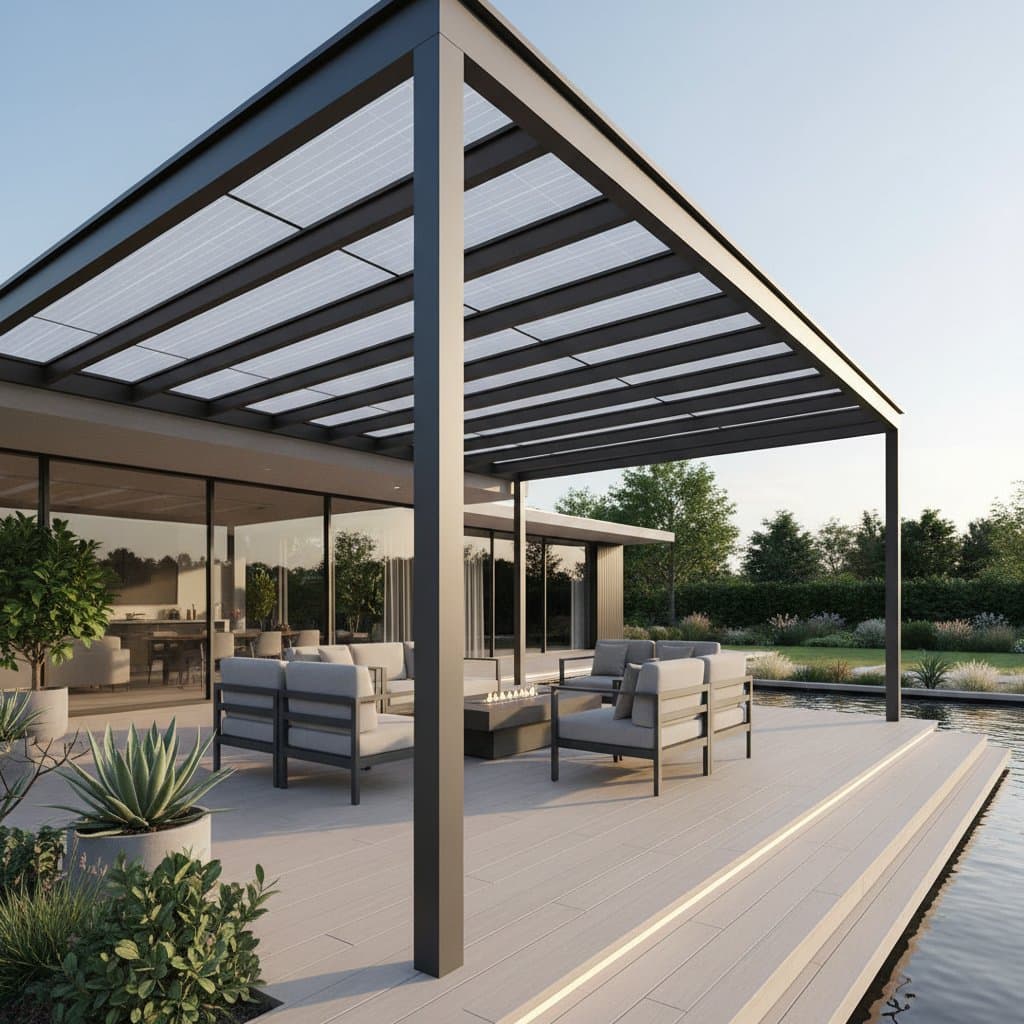
Understanding Transparent Solar Decks
Transparent solar decks represent an innovative fusion of architecture and renewable energy technology. These structures feature semi-transparent photovoltaic panels mounted on a canopy framework above the deck surface. The panels capture sunlight to generate electricity while allowing diffused light to pass through, providing shade without blocking views or natural illumination.
The core technology relies on thin-film solar cells embedded in glass or polymer sheets. These cells convert sunlight into direct current electricity, which an inverter then transforms into usable alternating current for home appliances or grid feed-in. Unlike traditional opaque solar panels, transparent versions achieve 5 to 10 percent efficiency in power generation, prioritizing aesthetics and functionality over maximum output.
Homeowners appreciate this design for its dual purpose: it cools outdoor areas by reducing direct solar heat gain by up to 30 percent, while producing enough energy to power lights, fans, or small devices. In urban settings like New York City, where space is premium, these decks maximize limited yards without compromising on sustainability.
Key Benefits for Outdoor Living
Installing a transparent solar deck offers multiple advantages beyond energy production. The filtered sunlight creates a comfortable environment for relaxation, reducing glare and ultraviolet exposure during peak hours. This setup encourages extended use of outdoor spaces, from morning coffee to evening gatherings.
Energy independence forms another pillar of appeal. Depending on panel size and local insolation, a standard installation can offset 20 to 40 percent of a household's electricity needs, leading to annual savings of several hundred dollars. Environmentally, these decks contribute to lower carbon footprints by harnessing clean power on-site.
Aesthetically, the sleek, modern look integrates seamlessly with contemporary homes. The transparency preserves sightlines to gardens or cityscapes, enhancing property value. Studies indicate that solar-integrated features can increase resale prices by 3 to 5 percent in eco-conscious markets.
Installation Process
Professional installation ensures safety and optimal performance for transparent solar decks. Begin with a site assessment to evaluate structural integrity, sunlight exposure, and local building codes. Engineers calculate load-bearing capacity, as the canopy must withstand wind, snow, and rain.
The process unfolds in stages. First, construct the framework using aluminum or steel beams anchored to the deck's posts or house foundation. Next, install the transparent panels, securing them with weatherproof seals. Wiring follows, connecting panels to an inverter and either the home grid or a battery system.
Electrical integration requires permits and inspection to comply with standards like those from the National Electrical Code. For a 120-square-foot deck, the entire project spans three to five days, assuming clear weather. Homeowners can assist with minor tasks, but certified installers handle electrical and structural elements to maintain warranties.
Cost Considerations
Budgeting for a transparent solar deck involves several components. Materials, including panels, framework, and inverter, range from 9,000 to 15,000 dollars for a 120-square-foot installation. Labor costs add 2,000 to 4,000 dollars, covering framing, electrical work, and sealing.
Additional expenses may include permits (200 to 500 dollars) and optional battery storage (3,000 to 5,000 dollars). Federal tax credits, such as the 30 percent Investment Tax Credit, can offset up to 40 percent of total costs, making the investment more accessible.
Return on investment typically occurs within 7 to 10 years through energy bill reductions and potential incentives. Panels endure 25 years with proper care, ensuring long-term value. Compare quotes from multiple vendors to secure competitive pricing and financing options.
Optimizing Storage and Layout
The shaded canopy of a transparent solar deck invites creative storage solutions. Cooler temperatures beneath preserve items like cushions and tools from sun damage, extending their lifespan.
Consider these practical enhancements:
- Install a built-in bench with compartments for storing outdoor cushions or gardening supplies.
- Position USB charging outlets beneath the rafters, powered directly by the solar system.
- Organize stackable bins by seasonal use to maintain accessibility.
- Suspend string lights or ceiling fans from the frame using secure hooks, drawing energy from the panels without additional grid connections.
These modifications convert the deck into a functional extension of indoor living, suitable for daily activities and evening relaxation.
Routine Maintenance Practices
Regular upkeep sustains the efficiency and longevity of transparent solar decks. Cleaning removes debris that impedes light absorption, potentially boosting output by 25 percent.
Follow this quarterly routine:
- Hose down panels to dislodge dirt and pollen.
- Apply a mild soap solution and gently scrub with a soft sponge.
- Rinse thoroughly and allow natural drying.
- Inspect brackets, wiring enclosures, and seals for corrosion or wear.
In tree-heavy areas, increase frequency to monthly during growing seasons. Avoid abrasive tools or chemicals that could scratch the surface. Annual professional reviews verify system integrity and warranty compliance.
Common Troubleshooting Steps
Most issues with transparent solar decks arise from environmental factors and resolve with simple interventions. Monitor performance via the inverter display to catch problems early.
Address these concerns:
- Reduced energy output: Wipe away accumulations of dust, bird droppings, or leaves using the cleaning method above.
- Leaks at joints: Examine seals post-rainfall and apply fresh silicone caulk as needed.
- Overheating spots: Identify shading from branches or debris and clear obstructions; replace damaged sections promptly.
- Inverter malfunctions: Verify circuit breakers and reset if necessary; consult an electrician for persistent failures.
Dedicate one hour monthly to inspections, preventing costly downtime and ensuring consistent power generation.
Engaging Professional Assistance
Certain scenarios demand expert intervention to safeguard the system. Seek professionals for:
- Visible cracks or discoloration in panels.
- Inverter errors or data display interruptions.
- Persistent water infiltration at connections.
- Expansions like battery integration or grid-tie configurations.
Select installers certified in solar technologies, and request a service contract for yearly checkups. This approach upholds safety standards and preserves manufacturer guarantees.
Integrating into Daily Life
A transparent solar deck reshapes outdoor routines by blending comfort with utility. Diffused light fosters glare-free reading or dining, while generated power supports off-grid conveniences like device charging.
Track energy production through app integrations to appreciate real-time benefits. Families report increased outdoor time, attributing it to the inviting, temperate atmosphere. Maintain organization by stowing items post-use and monitoring for shade encroachments.
Scalability allows phased implementation: start with a canopy over key areas and add sections later. This modular approach aligns with evolving needs and budgets, fortifying home resilience against rising energy costs.
Practical Actions to Begin
Advance your project with these immediate steps:
- Assess your deck's dimensions and sunlight patterns to determine canopy sizing.
- Obtain estimates from experienced solar deck specialists.
- Establish a maintenance schedule to integrate seamlessly into household routines.
Transparent solar decks deliver enduring shade, style, and energy savings. Thoughtful implementation yields a versatile outdoor haven that sustains both lifestyle and sustainability.