
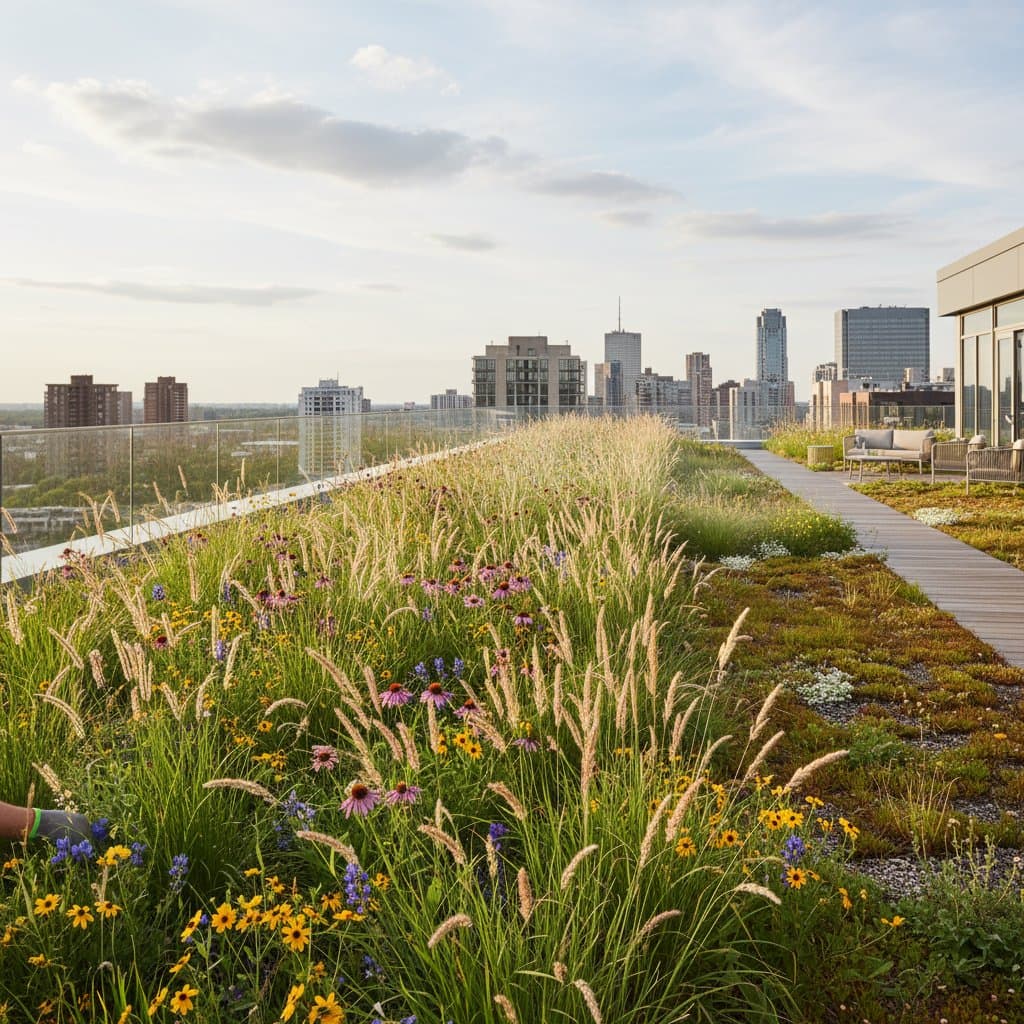
Native Grasses Outperform Sedum in Cooling 2025 Rooftop Meadows
City rooftops have long featured sedum for its compact growth and resilience. However, a significant evolution is underway. Designers and property owners increasingly select native grasses to create dynamic rooftop meadows that sway in the breeze, retain moisture effectively, and maintain vitality during extreme weather conditions.
The objective remains straightforward: establish a green roof that reduces building temperatures, aids pollinator populations, and requires minimal ongoing attention. Native grasses now excel in achieving these outcomes. The following sections detail their advantages and provide a comprehensive guide to implementing a rooftop prairie on a modest scale.
Key Advantages of Native Grasses
Sedum has dominated green roofing applications due to its lightweight nature, durability, and straightforward installation in modular trays. Nevertheless, its shallow root systems limit water storage capacity and provide scant habitat value for wildlife. In contrast, native grasses like little bluestem (Schizachyrium scoparium), prairie dropseed (Sporobolus heterolepis), and switchgrass (Panicum virgatum) develop extensive root networks extending 12 to 24 inches into the soil.
These deeper roots perform multiple functions. They capture and infiltrate stormwater, preventing runoff and reducing urban flooding risks. The roots also stabilize the growing medium against erosion and foster cooler microenvironments on the roof surface, potentially lowering temperatures by up to 15 degrees Fahrenheit compared to sedum-covered areas. This cooling effect translates to substantial energy savings for building cooling systems, particularly in densely populated urban settings.
Beyond thermal regulation, native grasses enhance ecological diversity. A modest area of these plants can attract up to ten times the number of pollinators—such as bees, butterflies, and hoverflies—relative to an equivalent sedum planting. This biodiversity supports local food webs, improves air quality through natural filtration, and contributes to the overall resilience of city ecosystems. In 2025, as sustainability mandates intensify, these grasses align seamlessly with green building certifications like LEED.
Essential Tools and Materials
Assembling a rooftop meadow requires a focused set of components to ensure longevity and performance:
- A custom soil blend, applied at 4 to 6 inches depth, consisting of 70 percent coarse mineral material (such as expanded shale or pumice) and 30 percent organic compost for nutrient balance.
- A robust root barrier membrane to safeguard underlying waterproofing layers from invasive growth.
- A drainage mat or layer of lightweight gravel to facilitate excess water removal while retaining necessary moisture.
- Plugs or a seed mixture of native grasses adapted to full sun exposure and prevailing wind conditions in your region.
- A watering device, such as a lightweight hose or watering can, essential during the initial establishment phase.
- Personal protective equipment, including a safety harness, for tasks conducted near roof perimeters.
Selecting regionally appropriate varieties ensures adaptation to local climate variations, from humidity to frost cycles.
Installation Process
Step 1: Assess and Prepare the Roof Structure
Begin by verifying that the roof supports a minimum load of 20 pounds per square foot when saturated. Consult a structural engineer or certified roofing specialist to conduct this evaluation, which may involve reviewing architectural plans or performing on-site tests. Remove accumulated debris, repair any membrane imperfections, and ensure unobstructed access points for maintenance.
Step 2: Layer Barriers and Growing Medium
Position the root barrier membrane across the entire surface, overlapping seams by at least 6 inches and securing with adhesive. Follow with the drainage layer, then introduce the prepared soil mix. The combined thickness of these elements should approximate 5 inches, with careful attention to sloping edges to promote unimpeded water drainage toward scuppers or drains.
Step 3: Plant in Strategic Clusters
Arrange grass plugs at intervals of 8 to 10 inches to allow for natural expansion. Incorporate a variety of species with differing mature heights—such as the 2-foot little bluestem alongside the taller 4-foot switchgrass—to promote visual interest and complementary root architectures. Irrigate deeply immediately after planting and maintain consistent moisture for the first several weeks to encourage root development.
Step 4: Apply Mulch and Observe Progress
Spread a light covering of organic mulch, such as straw or finely shredded bark, to conserve soil moisture and suppress weed emergence. Conduct regular inspections, at least monthly, to monitor for signs of establishment, adjusting watering as plants acclimate to rooftop conditions.
Essential Safety Considerations
Wear heavy-duty gloves to protect against abrasions from soil handling or gravel placement. Maintain a safe distance from roof edges, utilizing guardrails or a tethered harness compliant with OSHA standards. Adhere strictly to calculated load capacities, avoiding excessive material accumulation that could compromise structural integrity.
Common Challenges and Solutions
Yellowing foliage in young plants often indicates inadequate drainage, leading to root rot from prolonged saturation. Test soil permeability and amend with additional drainage material if necessary.If growth appears uneven or sparse, evaluate the soil depth and composition; insufficient volume restricts root expansion. Incorporate more compost for fertility or coarse sand to enhance aeration.
Wind exposure poses a risk to seedlings, potentially dislodging them from loose substrates. Secure the area with temporary biodegradable netting until roots anchor firmly, typically within 4 to 6 weeks.
Ongoing Care and Seasonal Management
Established native grasses demand little intervention. Perform a single annual trim in late winter, reducing heights to 6 inches above the soil line. Allow the cuttings to decompose naturally on site, enriching the soil with organic matter and minimizing waste.
During dry periods, supplemental watering may be required in the first year, but mature plants exhibit remarkable drought tolerance. Monitor for pests like aphids, addressing them with targeted, eco-friendly sprays rather than broad-spectrum chemicals.
Cost Estimates and Timeline
Material and plant costs typically range from 4 to 6 dollars per square foot, covering soil, barriers, and vegetation. For a rooftop under 200 square feet, two individuals can complete the project over a single weekend, factoring in preparation and planting time. Larger installations benefit from phased approaches to manage labor and budget.
Professional Assistance Indicators
Engage a licensed roofing contractor or green infrastructure specialist if uncertainties arise regarding load-bearing capacity, waterproofing integrity, or custom drainage configurations. Inquire about extended warranties that encompass both the green roof system and underlying structure, ensuring long-term protection.
Establishing Your Rooftop Meadow
- Evaluate your roof's load capacity and daily sunlight exposure to select compatible grasses.
- Research and procure three native species proven to flourish in your local ecoregion, consulting resources from native plant societies.
- Initiate with a pilot section of 50 square feet to refine soil mixtures and irrigation protocols based on real-world performance.
A thoughtfully designed native grass meadow elevates an ordinary rooftop into a vibrant, functional ecosystem. It mitigates urban heat islands, bolsters wildlife habitats, and delivers aesthetic appeal that endures through seasons, fostering a deeper connection to nature amid cityscapes.