
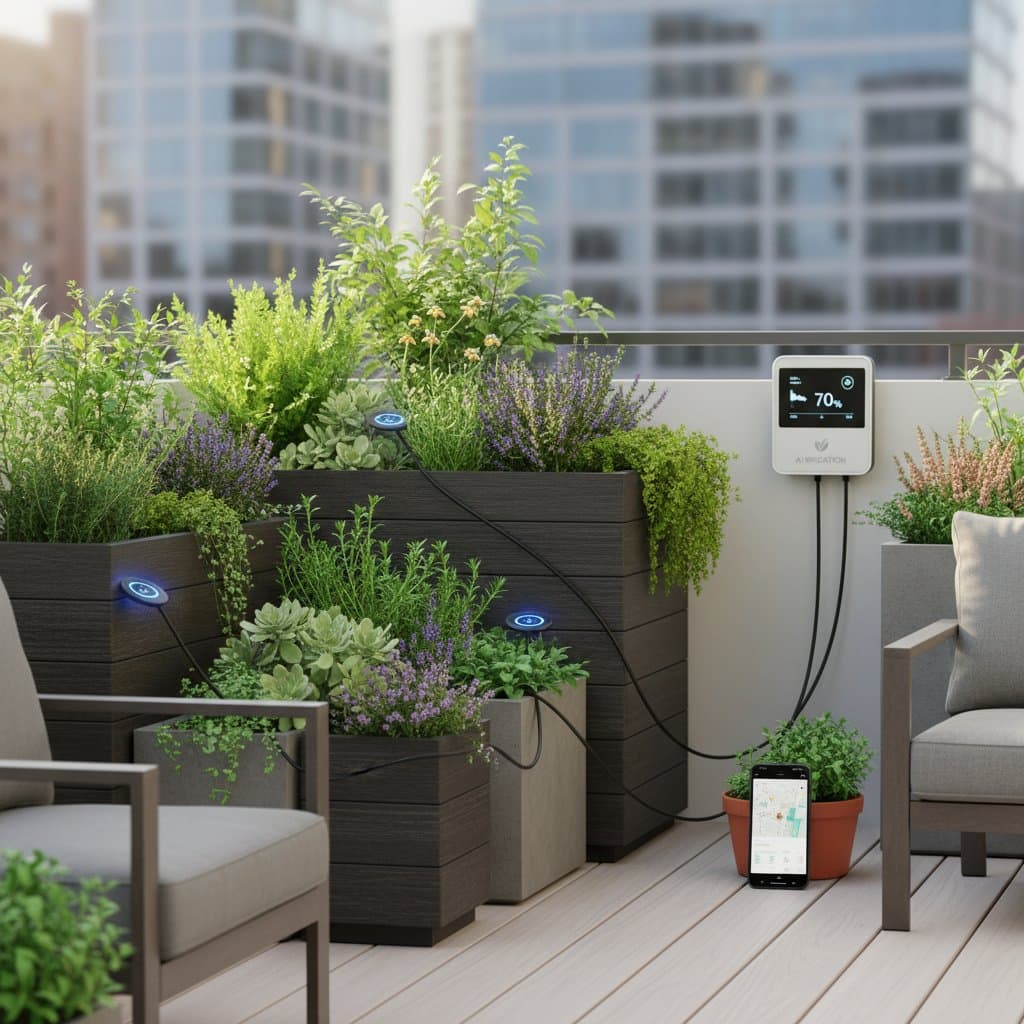
Introduction to AI Irrigation for Deck Gardens
Urban decks often host vibrant container gardens, but manual watering demands time and resources. Traditional methods lead to overwatering or neglect, wasting water and stressing plants. AI irrigation systems address these challenges by delivering precise amounts based on actual needs.
These systems integrate soil moisture sensors, weather data, and automated controllers to optimize schedules. In my experience, implementing one on a 200-square-foot deck slashed water usage by 70 percent over a season. Plants thrived with consistent moisture, and weekly checks replaced daily routines. This guide outlines the process from planning to maintenance, enabling similar results for any urban gardener.
Essential Tools and Materials
Before installation, gather these components for a reliable setup:
- AI controller with app connectivity (models like Rachio or Orbit B-hyve support deck-scale zones).
- Soil moisture sensors (one per watering zone, calibrated for pots and planters).
- Drip tubing (1/4-inch diameter, 50-100 feet depending on deck size).
- Drippers and emitters (adjustable flow rates of 0.5-2 gallons per hour).
- Faucet adapter or hose splitter (with built-in filter to prevent clogs).
- Barbed connectors, tees, and end caps (for secure, leak-free joins).
- Basic tools: pruning shears for cutting tubing, adjustable wrench for fittings.
Budget typically ranges from $150 to $300 for a small deck system. Select weather-resistant materials to withstand outdoor exposure.
Planning Your Layout
Map the deck to identify watering zones. Group plants by sunlight and soil type: sun-loving herbs in one area, shade-tolerant ferns in another. Each zone requires its own sensor and drip line to account for varying evaporation rates.
Sketch paths for tubing along railings or under planters to avoid visibility. Calculate dripper needs: one per plant or two for larger pots. Factor in deck dimensions; a 10x10-foot space might use four zones. This planning prevents inefficiencies and ensures even coverage.
Step 1: Install the Controller
Position the AI controller near a power outlet and water source, ideally sheltered from direct rain. Mount it on a wall or post using included brackets. Connect to Wi-Fi via the companion app, which guides initial configuration.
Power on the unit and verify signal strength. Strong connectivity allows remote adjustments and data logging. Test basic functions before advancing.
Step 2: Place Soil Sensors
Insert sensors into the root zone of representative pots in each area, about 4-6 inches deep. Avoid spots near edges where moisture evaporates quickly. Label sensors in the app for easy tracking.
Sensors measure volumetric water content and temperature, feeding data to the controller. Accurate placement ensures the system responds to true conditions, preventing under- or overwatering.
Step 3: Lay Out Drip Tubing
Run the main supply line from the water source along the deck perimeter, securing with clips or ties. Branch off to zones using tees. Cut tubing to length with shears for clean ends.
Attach drippers at plant bases, pointing toward soil. Cap unused ends to maintain pressure. This network delivers water directly to roots, minimizing evaporation in urban heat.
Step 4: Connect Emitters and Sensors
Link drip lines to the controller outlet with barbed fittings. Push tubing firmly onto connectors; secure with clamps if needed. Wire sensors to the controller per manufacturer instructions, often via waterproof plugs.
Flush lines by running water briefly to clear debris. Inspect for proper seating to avoid future leaks.
Step 5: Integrate Weather Data
In the app, enable weather integration. The system pulls local forecasts to adjust for rain or humidity, skipping cycles when unnecessary. Set baseline preferences: target moisture levels around 20-30 percent for most deck plants.
This feature enhances efficiency, further reducing consumption during wet periods.
Step 6: Link to Water Source
Attach the tubing to a faucet adapter or hose splitter. Connect the main line to the AI controller inlet. Tighten connections by hand until secure.
Turn on the water supply gradually to inspect for leaks. Address any issues by replacing loose joints with barbed connectors.
Step 7: Calibrate and Sync
Access the app or control panel to pair sensors and designate zones. Proceed through setup prompts to name each area.
Initiate a brief test cycle of approximately two minutes per zone. The system establishes moisture baselines and begins automatic schedule adjustments based on collected data.
Step 8: Test and Observe
Examine the setup the following day. Soil in each zone should remain lightly moist, without saturation. Review app dashboards for moisture trends.
If a zone shows persistent highs or lows, relocate its sensor or modify dripper output. Fine-tuning refines performance over the first week.
Troubleshooting Common Issues
Low Water Pressure
Weak dripper output signals potential kinks or clogs. Inspect and straighten lines; clean or replace emitters as required. Install a pressure regulator if faucet pressure surpasses 50 psi.
Uneven Watering
Dryer areas may need sensor repositioning toward the center or additional drippers. Precise data accelerates controller adaptations for balanced hydration.
Connectivity Interruptions
App signal loss requires relocating the controller nearer to the router or installing a Wi-Fi extender. Update firmware via the app to resolve software glitches.
Leaks at Connections
Loose fittings cause most leaks. Trim one inch from the tubing end and reinsert into the connector. Opt for fresh barbed fittings on aged lines.
Seasonal Storage
For winter removal, label tubing segments with masking tape, noting positions like left rail or corner planter. This organization streamlines spring reinstallation.
Store components in a compact bin alongside silica gel packets to prevent moisture damage. Clean all parts before packing.
Professional Assistance Options
Complex decks with numerous zones or intricate plumbing benefit from licensed plumber involvement. They can establish a dedicated irrigation line featuring a backflow preventer.
Request a pressure assessment to suit dripper specifications, a dedicated shutoff valve for winterization, and recommendations for compatible controllers aligned with the water supply.
Homeowners manage most hose-based installations independently with safety precautions.
Key Benefits and Insights
AI irrigation diminishes water usage by roughly 70 percent on compact decks through need-based delivery. It relies on real-time soil metrics rather than rigid timers.
Installation requires several hours with standard tools, yielding returns via reduced utility costs and robust plant vitality. Each step, from sensor deployment to line flushing, fosters uniform moisture and vigorous development.
Implementing Your System
Begin modestly with a single sensor and drip line on the thirstiest planter. Observe consistent soil conditions to build confidence.
Immediate Steps:
- Assess current watering patterns and identify quick-drying containers.
- Select a user-friendly AI controller equipped with soil sensors and mobile app integration.
- Diagram tubing routes and quantify required drippers prior to purchase.
Automated irrigation simplifies deck cultivation, enhancing sustainability. Thoughtful implementation yields lush greenery on balconies or decks, conserving water, expenses, and effort.